Oklahoma beat No. 1 Texas 27–24 in Dallas, Georgia defeated No. 6 Alabama 20–17, and Kentucky edged No. 10 LSU 35–34 in overtime on October 10, 2026. Those are final Week 6 results in NCAA.com’s recap, rather than scores from an earlier point in its live coverage. The table below brings the main verified results together.
The US Saturday slate drew attention because the leading team lost its rivalry game while Georgia, ranked second going in, survived a top-ten opponent. Readers arriving on October 11 may see both completed-game recaps and predictions for the next AP poll. The numbers beside teams here describe the rankings used for these games; they do not declare a newly published order.
Selected October 10 final scores
| Winner | Loser | Final |
|---|---|---|
| Oklahoma | No. 1 Texas | 27–24 |
| No. 2 Georgia | No. 6 Alabama | 20–17 |
| Kentucky | No. 10 LSU | 35–34 OT |
| No. 3 Notre Dame | Stanford | 58–7 |
| No. 5 Ohio State | Maryland | 45–16 |
| No. 7 Indiana | Nebraska | 20–17 |
| No. 9 Ole Miss | Vanderbilt | 52–17 |
Selected games, not the full slate. Ranks refer to those used for the games; OT means overtime.
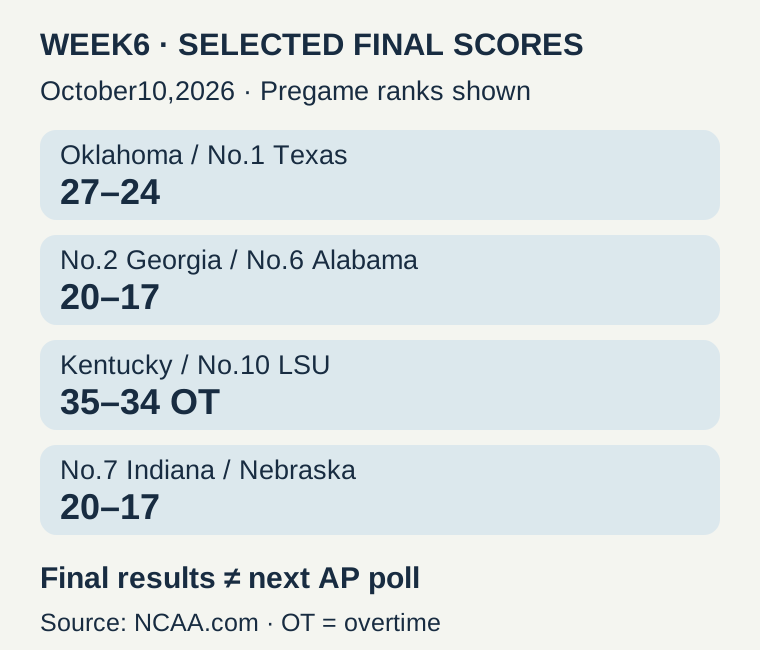
The results that changed Saturday
Other confirmed finals include No. 3 Notre Dame 58–7 Stanford, No. 5 Ohio State 45–16 Maryland, No. 7 Indiana 20–17 Nebraska and No. 9 Ole Miss 52–17 Vanderbilt. Indiana’s victory ended Nebraska’s unbeaten run, according to the NCAA recap. Reading each final separately is more useful than treating every ranked-team appearance as an upset.
Kentucky’s 35–34 win over LSU was decided in overtime, when the Wildcats chose and converted a two-point attempt after their touchdown. NCAA.com identifies it as their second consecutive week winning an overtime game that way. The one-point margin therefore reflects a successful decision to seek the win, rather than a tied game awaiting another period.
How Oklahoma overturned the favourite
Oklahoma’s 27–24 victory was sealed by a field goal. The NCAA’s dedicated Red River report also records Peyton Bowen’s 42-yard interception return for a touchdown and a blocked-punt touchdown. Those defensive and special-teams scores explain why the final cannot be understood solely as a comparison of offensive production.
The result changes what readers should watch next: how the poll responds to the top team’s defeat and how Oklahoma builds on its rivalry win. A single game establishes a winner and loser; it does not by itself settle playoff participation or the rest of either team’s season. Any projected ranking should be labelled as a forecast until a dated poll is published.
Read final scores before ranking projections
For another game, open the NCAA Week 6 page linked below and check its final scoreboard before using a time-stamped live entry. Earlier updates describe the situation at that moment. The UCLA–Oregon score is excluded from this selected table because the page’s final ticker and one older recap disagree; it should not be silently resolved by choosing whichever figure appears first.
For the next ranking question, use the official rankings route linked from NCAA.com and check the poll date. Keep three facts separate: the rank a team held going into October 10, its completed-game score, and its position in a later poll. That distinction lets the reader follow the consequence of an upset without turning a prediction into a confirmed result.
NCAA.com’s complete final recap and dated Red River report were directly read. Selected scores are final; team ranks refer to the games. A conflicting UCLA score is excluded, and later poll projections are kept separate.
AI assisted with drafting and editing. This article is part of our preview edition. Editorial standards & corrections →