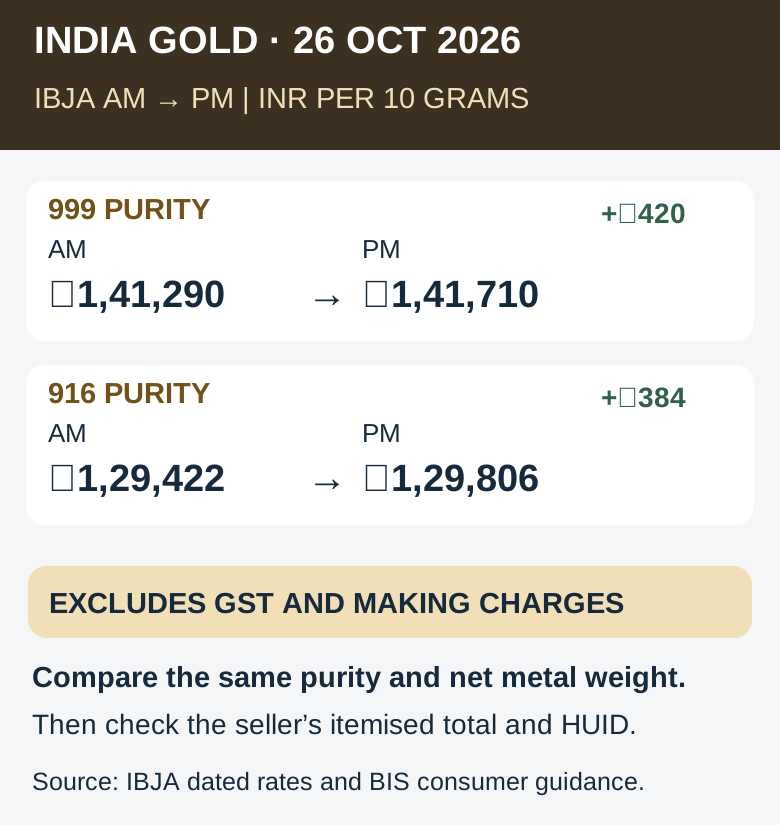
India’s IBJA PM gold benchmark for Monday, 26 October 2026 is ₹1,41,710 per 10 grams for 999 purity and ₹1,29,806 per 10 grams for 916 purity, commonly described as 22-carat gold. Both are above the day’s AM readings. These are metal benchmarks excluding GST and making charges, so neither figure is a finished-jewellery bill.
The date, session and type of rate matter when comparing a quote this evening. IBJA publishes separate AM and PM figures, while search results also show jewellers’ selling rates and indicative retail series. Comparing a morning bullion number with a shop’s evening jewellery quote can create an apparent discrepancy before purity, weight or charges have even been matched.
What changed between AM and PM
On the same 10-gram basis, 999 gold rose from ₹1,41,290 in the AM table to ₹1,41,710 PM: a ₹420 increase, or about 0.30%. The 916 benchmark moved from ₹1,29,422 to ₹1,29,806, up ₹384, also about 0.30%. These are within-day comparisons. Against the previous published PM observation on 23 October, the increases were only ₹80 for 999 and ₹73 for 916.
The association’s methodology explains why this is a reference series rather than one shop’s promise to sell. Its gold process polls tradable prices across the physical-market value chain, uses an auction process for 995 purity and derives the other grades from that base through 999. The document describes 29 participants for gold. It does not establish a single cause for Monday’s price movement, so this article does not attribute the change to a currency, policy decision or festival.
Turn a benchmark into a fair comparison
For a buyer, the useful comparison starts with the fineness stamped on the item. A 916 quote should be compared with a 916 reference, not the higher 999 number. Divide the 10-gram benchmark by ten only if the seller quotes per gram: Monday’s 916 PM reference is ₹12,980.60 per gram. That conversion changes the unit, not the purity or the scope of costs included.
A clearly labelled example shows the limitation: eight grams of net 916 gold at that benchmark would have a metal value of ₹1,03,844.80, before any additional charges or tax. This is an illustration, not an offer from a jeweller. Ask the shop to separate the gold component, stones or other material, making charges and tax so that any difference can be traced to a rate or a cost component rather than assumed to be an error.
Check the hallmark and the itemised bill
For hallmarked jewellery, BIS says the bill should describe the item and state the precious-metal net weight, purity in carats and fineness, and hallmarking charges. Its official guidance also identifies the six-character HUID and the BIS Care app’s Verify HUID feature. Use those checks alongside the invoice: verifying a hallmark addresses the item’s identity and purity record, not whether a particular making charge is competitive.
The practical conclusion is to compare like with like before deciding whether a quote is high or low. Record the seller’s date and session, the item’s fineness and net weight, then compare the fully itemised total. A later IBJA update will change the reference, while a different design can change labour and other charges. Monday’s small AM-to-PM rise is a dated observation, not evidence of what gold will do next.
Checked against the linked primary sources on 26 October 2026. Confirmed facts, attributed reactions and editorial interpretation are distinguished.
- IBJA: AM and PM benchmark rates ↗
- IBJA: dated opening and closing rate table ↗
- IBJA: how benchmark rates are calculated ↗
- BIS: consumer invoice requirements ↗
- BIS: hallmark and Verify HUID ↗