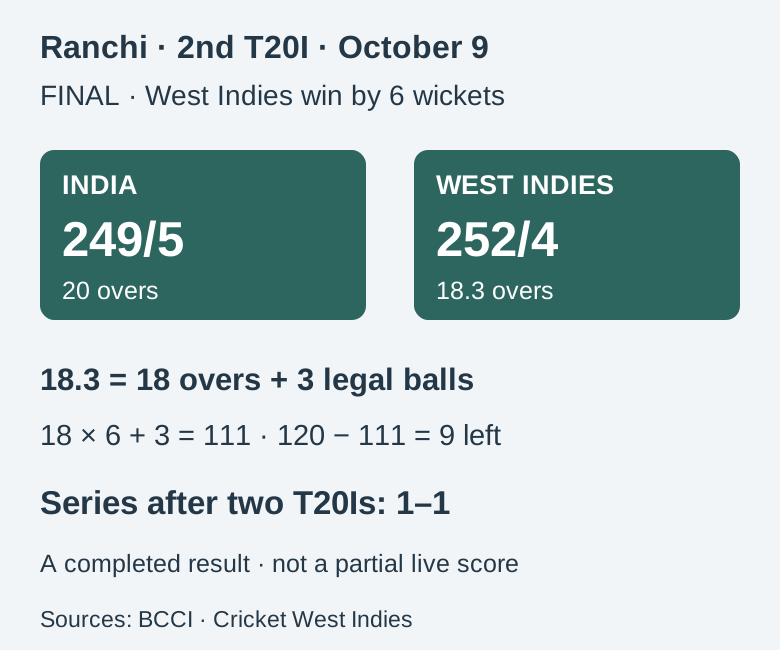
West Indies beat India by six wickets in the second T20I at Ranchi on October 9, 2026. India finished on 249/5; West Indies reached 252/4 in 18.3 overs. BCCI’s final record and Cricket West Indies agree on the result, with nine balls remaining. This match is over, so an older “live score” is not its final score.
The game was played at JSCA International Stadium Complex. India had won the first T20I in Lucknow on October 6, so the two completed T20Is leave the series level at 1–1. That sequence is why the Ranchi result changes the series picture: India’s opening win did not settle the contest.
Why 252/4 means a six-wicket win
India’s 249 set a target of 250. West Indies passed that target while losing four wickets, which is why the winning margin is six wickets rather than three runs. In a chase, the margin counts wickets available when the target is reached; subtracting the two final totals gives the wrong description of this win.
The score also separates two questions often mixed in match searches: how many runs were required and how much time was left. The target came from India’s completed innings; the remaining balls came from the point at which West Indies finished. A large first-innings total alone does not tell a reader whether the chase succeeded.
18.3 overs means nine balls remained
The notation 18.3 means 18 overs and three legal balls, not 18.3 decimal overs. That is 18 × 6 + 3 = 111 legal balls. In a 20-over innings there are 120, leaving nine. Cricket West Indies states the same nine-ball margin, providing a check on the calculation.
The October 6 score was a different match: India reached 172/2 and won by eight wickets with 32 balls remaining. Those earlier figures still describe Lucknow, but they should not appear as Ranchi’s result. Keep the date, venue and match number together when opening highlights or a scorecard.
Find the Ranchi final record
For the final result, use the BCCI second-T20I link below. For the sequence of the tour, Cricket West Indies lists both October 6 and October 9 and links each Match Centre. Select Ranchi or “2nd T20I” for this match. A live-score page saved before the finish may show a score that was correct only at that earlier moment.
The series is now level after two completed games; it is not decided. The next useful observations are the following match’s official lineup and final result. These verified team totals do not establish individual batting scores or the tactical cause of the defeat, so neither is invented here. The final record and a clear explanation of its notation provide a firmer reference than a partial live update.
BCCI and Cricket West Indies final records agree on Ranchi’s October 9 second T20I. The overs-to-balls and 1–1 series calculations are editorial checks. Individual batting scores and tactical causes are not inferred from team totals.
AI assisted with drafting and editing. This article is part of our preview edition. Editorial standards & corrections →