Georgia is No. 1 in the AP Top 25 released on Sunday, October 11, 2026, while Texas drops from No. 1 to No. 7. Notre Dame, Miami and Ohio State complete the top four. The table below gives all 25 positions from the AP’s official release, so the date and poll are clear before a reader compares another ranking.
This is the new poll following the October 10 games across US college football, rather than the rankings those teams carried into Saturday. Georgia beat Alabama 20–17, while Texas lost 27–24 to Oklahoma. Those results explain the opening at the top. They also make the Sunday order a useful follow-up to the weekend scoreboard: a final score and the later ranking answer different questions.
AP Top 25 — October 11, 2026
| Rank | Team |
|---|---|
| 1 | Georgia |
| 2 | Notre Dame |
| 3 | Miami (Fla.) |
| 4 | Ohio State |
| 5 | Indiana |
| 6 | Alabama |
| 7 | Texas |
| 8 | BYU |
| 9 | Ole Miss |
| 10 | Texas Tech |
| 11 | Utah |
| 12 | UCLA |
| 13 | Missouri |
| 14 | Tennessee |
| 15 | Kentucky |
| 16 | Mississippi State |
| 17 | Iowa |
| 18 | Oklahoma State |
| 19 | USC |
| 20 | Houston |
| 21 | Wake Forest |
| 22 | LSU |
| 23 | Boise State |
| 24 | SMU |
| 25 | Northwestern |
AP media poll after the October 10 games. Teams receiving votes outside the 25 are not assigned positions in this table.
The new order follows Saturday’s results
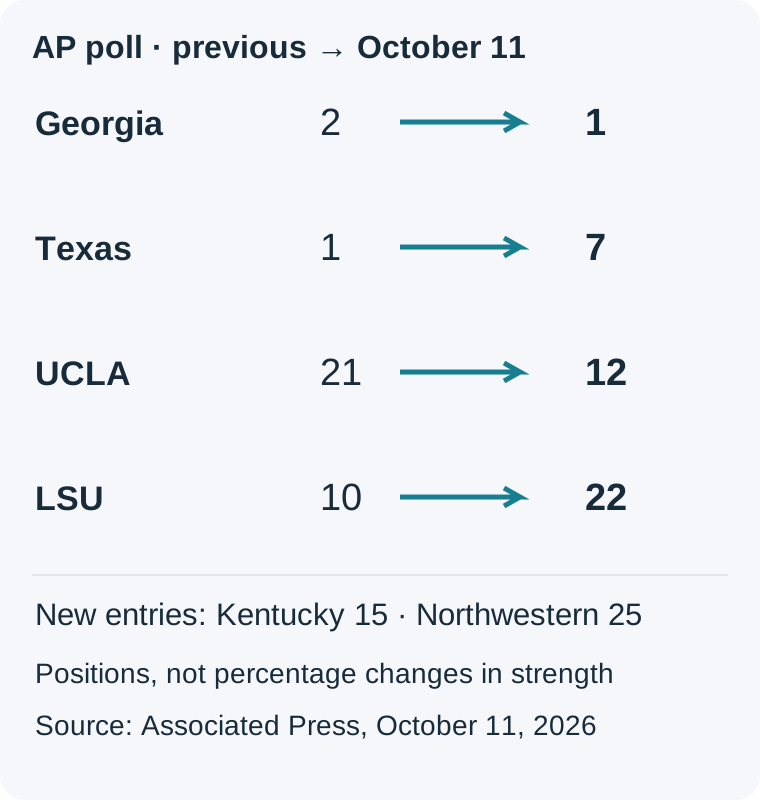
The movement is uneven. Georgia rises one place from No. 2, Texas falls six, UCLA climbs nine from No. 21 to No. 12, and LSU drops twelve from No. 10 to No. 22. Kentucky enters at No. 15 and Northwestern at No. 25; Oregon, Pitt and Florida leave the top 25. A team outside this list can still receive votes, so “unranked” does not mean that no voter included it.
The graphic separates a change of position from a new entry. This matters when checking a headline about the “biggest riser”: moving nine places within a published table and entering that table are different measurements. Nor is the number of places a percentage improvement in playing strength. It describes the order produced by this ballot after a new round of games.
A media ballot is not a playoff bracket
The AP poll is assembled from ballots by writers and broadcasters covering college football. Each ballot awards 25 points to its first team, down to one point for its twenty-fifth. The aggregate order therefore reflects many individual assessments. The AP’s voter discussion considers the opponent and wider record as well as whether a team won; a close loss and a heavy defeat need not produce identical movement.
Readers should compare the same poll and release date. The Coaches Poll is another ballot, while College Football Playoff selection is a separate process. The AP page’s playoff-bracket discussion is explicitly hypothetical. Treating the AP’s first twelve teams as an already selected playoff field would turn commentary into a decision that this Sunday release does not establish.
Which games now test the top of the poll
Two matchups identified by the AP for the following Saturday, October 17, directly test the upper order: No. 4 Ohio State visits No. 5 Indiana, and No. 2 Notre Dame visits No. 8 BYU. No. 6 Alabama also visits No. 14 Tennessee. To follow the change, open the dated AP page linked below, then compare the next release with this table; game times and US or UK broadcast access are not established by a poll ranking.
The useful observation is whether teams support their present position against the next opponent. A high rank is a current assessment, not protection from an upset or a guarantee of postseason selection. Reading the full order alongside the coming matchups gives more context than focusing only on the new No. 1, and keeps the next discussion tied to results that have actually happened.
The dated AP release supplies the complete poll and ballot method. Position changes are not percentage improvements, and an AP hypothetical bracket is not official playoff selection.
AI assisted with drafting and editing. This article is part of our preview edition. Editorial standards & corrections →