Inter beat Bologna 3–1 away in Serie A on October 17, 2026, recovering from Tommaso Pobega’s early goal. Marcus Thuram equalised before half-time, then substitutes Carlos Augusto and Ange-Yoan Bonny scored the second-half goals. The official Lega Serie A page titled Bologna 1–3 Inter provides the match highlights, with a direct link in the guide accompanying this article.
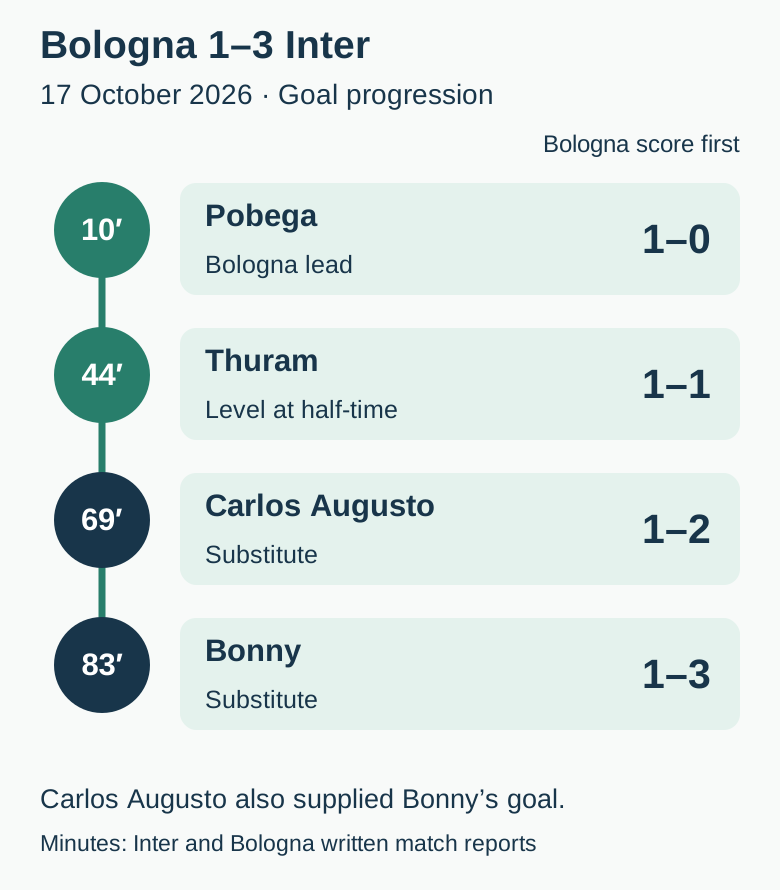
The seventh-round match at Stadio Renato Dall’Ara was a comeback, but the final margin conceals how much trouble Bologna caused before the interval. The two clubs’ written reports agree on the scoring sequence: Pobega in the tenth minute, Thuram in the 44th, Carlos Augusto in the 69th and Bonny in the 83rd. That sequence is the starting point for understanding how the game changed.
Bologna 1–3 Inter: the goal sequence
| Minute | Scorer | Score (Bologna first) |
|---|---|---|
| 10 | Tommaso Pobega | 1–0 |
| 44 | Marcus Thuram | 1–1 |
| 69 | Carlos Augusto (substitute) | 1–2 |
| 83 | Ange-Yoan Bonny (substitute) | 1–3 |
October 17, 2026. Minutes corroborated by both clubs’ written reports. The Lega link provides official highlights, not a full-match replay.
Bologna’s first half makes the final score more revealing
Inter’s match report describes Bologna pressing with close marking and taking the lead after Juan Miranda won the ball from Luis Henrique. Pobega finished the attack. Bologna continued to threaten: Pobega also struck the crossbar around the 40th minute. Those chances matter because a three-goal Inter return should not be read as evidence that the visitors controlled every phase.
Thuram’s headed equaliser from Nicolò Barella’s cross arrived in the 44th minute. Inter therefore reached the interval level, rather than having to pursue a deficit throughout the second half. The goal changed the score before the substitutions changed the personnel. It also keeps the explanation of the comeback grounded in two stages, rather than attributing all of it to the bench.
The substitutes supplied both second-half goals
Bonny replaced Francesco Pio Esposito after the break, while Carlos Augusto and Andy Diouf also came on. Inter’s report describes the move for 2–1 running through Diouf and Piotr Zieliński before Carlos Augusto finished in the 69th minute. The substitute’s impact was immediate on the scoresheet, but it came at the end of a combined move rather than an isolated individual action.
Carlos Augusto then supplied the low cross for Bonny’s 83rd-minute finish. Bologna’s official scorecard confirms both scorers and minutes. The bench contribution was therefore concrete: two substitute scorers, with one also setting up the other. Inter’s account also records an earlier Bonny effort ruled out for offside, so that disallowed finish should not be added to the final tally.
Where to find the official highlights
For the official clip, open the Lega Serie A Bologna–Inter page linked here and select the highlights entry headed Bologna 1–3 Inter. It is a match-highlights destination, not a full-match replay or a statement of Indian live-TV rights. Readers in India can use that official entry point without relying on an unofficial repost; local playback availability is governed by the league’s player and rights settings.
The decisive viewing focus is the passage from Thuram’s equaliser to the two substitute goals: first Inter escaped the first half level, then Carlos Augusto and Bonny supplied the winning margin. Bologna’s earlier chances remain part of that story. The 3–1 result shows the value of Inter’s second-half changes in this match, while the first-half evidence prevents the scoreline from becoming a claim of uninterrupted dominance.
Based on both clubs’ written match reports and the official league highlights page.
- Inter official Bologna–Inter match report ↗
- Bologna official final score and scorers ↗
- Lega Serie A official Bologna–Inter highlights ↗