Indiana receiver Charlie Becker apologized to Ohio State coach Ryan Day after the Buckeyes’ 19–15 win in Bloomington on October 17. The apology concerned Becker’s vulgar taunt during the previous season’s Big Ten championship celebration, according to Michael Niziolek’s report for The Herald-Times. It addressed that earlier conduct after the teams met again at Memorial Stadium.
Niziolek reported that WCMH-TV’s Joe Nugent captured the midfield exchange. Becker told Day that the earlier behavior did not represent him and expressed regret to both the coach and Ohio State. That identifies the subject of the apology; the published exchange does not establish every reason Becker chose that moment to speak.
Two events, one postgame explanation
| When | What is established |
|---|---|
| Previous Big Ten title celebration | The earlier taunt addressed in the apology |
| October 17, 2026 | Ohio State 19, Indiana 15; Becker: 9 catches, 165 yards |
| After that game | Reported apology to Ryan Day; official comments on improving receiver separation |
The apology account is attributed to The Herald-Times. Match figures and football comments come from Indiana University.
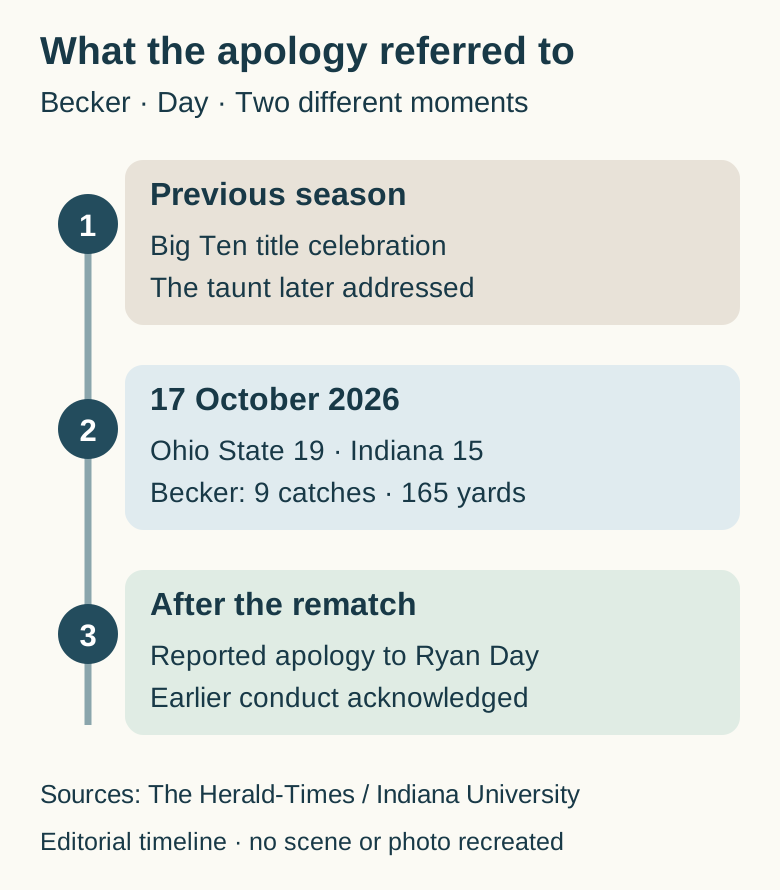
The apology referred to a previous celebration
The earlier episode followed Indiana’s win over Ohio State in last year’s Big Ten title game. The Herald-Times links Becker’s apology to the taunt used during that celebration. For readers arriving at the postgame clip, that sequence matters: the words refer back to a past incident, while Saturday’s meeting supplied the occasion for addressing Day directly.
There is a limit to what the scene alone can establish. An apology is an observable statement; a complete account of either person’s private feelings is not. The useful distinction is between what Becker acknowledged and broader claims that the rivalry was resolved or that Day’s response proves forgiveness. Those larger conclusions are not established by the reporting used here.
A productive game ended in defeat
Indiana’s official box score records nine receptions for 165 yards for Becker in the 19–15 defeat. Ohio State led 19–7 in the fourth quarter before Indiana cut the margin to four. The result left both teams 6–1 overall, with Ohio State 4–0 in the Big Ten and Indiana 3–1. Becker’s receiving production and the final team result describe different parts of the afternoon.
In the university’s postgame transcript, Becker turned to football matters. He said the receivers needed to get open more and create better separation for quarterback Josh Hoover. He also described film study and preparation for Michigan as the next steps. These are specific changes he publicly identified after the loss, rather than explanations supplied on his behalf.
What Becker said Indiana needed to do next
Readers can follow the Herald-Times report linked here for the account of the apology and Indiana’s official transcript for Becker’s comments on the game. The university’s box score supplies the statistics. Reading those records together keeps the reported on-field exchange connected to the match without using a short clip as a substitute for the whole postgame response.
The confirmed point is that Becker addressed a previous taunt directly after a difficult rematch, while his official football response focused on the receivers’ execution and the next opponent. The apology concerns his earlier conduct; nine catches and 165 yards describe his performance that day. Neither fact on its own changes the 19–15 result or supports a prediction about Indiana’s next game.
Apology reported by The Herald-Times; game statistics and postgame football comments verified against Indiana University records.
- Michael Niziolek, The Herald-Times, syndicated on AOL: Becker’s apology ↗
- Indiana University: October 17 postgame quotes ↗
- Indiana University: Ohio State–Indiana box score ↗