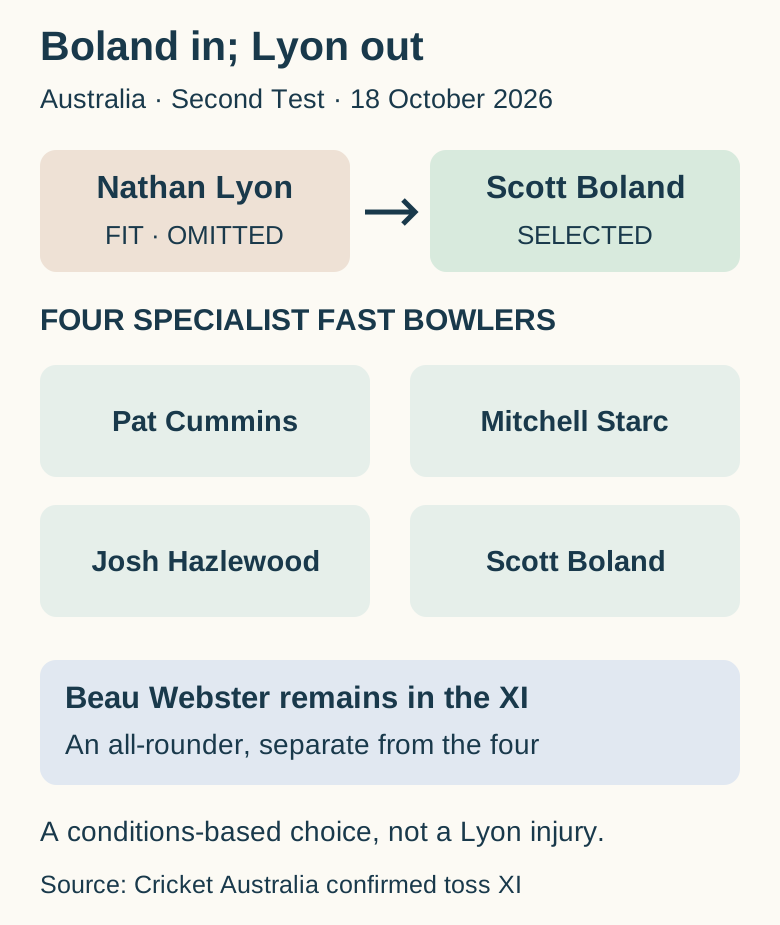
Scott Boland is in Australia’s confirmed XI for the second Test against South Africa at St George’s Park in Gqeberha on October 18, replacing Nathan Lyon. Lyon is fit: Australia have chosen four specialist fast bowlers for the conditions. Pat Cummins won the toss and opted to field, with Australia leading the three-Test series 1–0.
The selection turns a possibility discussed before the match into a confirmed change. Cricket Australia’s toss report names Boland alongside Cummins, Mitchell Starc and Josh Hazlewood. The rest of Australia’s side is unchanged from the team that won the first Test by 214 runs, so this is a change to the bowling balance rather than a wider reshuffle.
Australia’s confirmed XI
| Role grouping | Players |
|---|---|
| Top five | Travis Head, Nic Maddinson, Marnus Labuschagne, Steve Smith, Matthew Renshaw |
| Wicketkeeper | Alex Carey |
| All-rounder | Beau Webster |
| Specialist pace attack | Pat Cummins(c), Mitchell Starc, Scott Boland, Josh Hazlewood |
Second Test, 18 October 2026. Boland replaces a fit Nathan Lyon; groupings explain the selection and do not restrict bowling options.
A confirmed swap, not an injury replacement
Boland’s inclusion should not be read as evidence of a Lyon injury. The official report explicitly describes the spinner as fit. It also distinguishes this red-ball decision from previous omissions in pink-ball Tests. Calling it the first time Australia have left him out would erase that context; the relevant point here is the choice to use four specialist quicks in this match.
Beau Webster remains in the XI as an all-rounder. That matters when interpreting the phrase four quicks: it identifies the specialist attack rather than imposing a limit of four bowling options. The accompanying selection diagram separates Webster from the four specialist fast bowlers and shows the actual personnel change from Lyon to Boland.
Why the conditions mattered
Before the Test, Cummins had said rain, cold weather and the early-season timing could affect how much the pitch deteriorated later in the game. The toss report then described a surface greener than it had been a couple of days earlier and overcast conditions. Those observations explain why Australia favoured pace at this venue now; they do not establish that spin is generally ineffective at St George’s Park.
South Africa made a different choice, retaining off-spinner Simon Harmer while leaving out Keshav Maharaj. That is a useful counterpoint to Australia’s decision. The same ground and weather can lead to different team combinations, and a selection rationale is not a result. The match will test whether the balance chosen by each side gives it the better options as conditions change.
The XI and the test of the decision
The full Australia XI is listed in the guide with this article. For an Indian reader following the match, Cricket Australia’s official match centre provides the confirmed teams and score. The scheduled 10 am South African start corresponds to 1:30 pm IST; rain affected the start, so the scheduled time should not be treated as a statement that play began on time. Australian television and streaming details do not establish Indian viewing rights.
The answer to why Boland is playing is therefore specific: Australia preferred an additional specialist fast bowler to a fit Lyon for the second Test’s expected conditions. The most useful follow-up is how that attack operates as the surface and weather change, especially against South Africa’s decision to retain Harmer. Boland’s selection is confirmed; the success of the four-pace approach remains to be demonstrated on the field.
Confirmed selection and conditions from Cricket Australia’s toss report, pre-match interview and official match centre.
- Cricket Australia: confirmed toss and XIs ↗
- Cricket Australia: Cummins explains four-pace option ↗
- Cricket Australia: second Test preview ↗
- Cricket Australia: official match centre ↗