A yellow cold-health alert covers the North East, North West and Yorkshire and the Humber from 9 pm on Sunday 15 November to 9 am on Thursday 19 November 2026. The UK Health Security Agency’s November 14 update sets out that window in England. All times here are GMT.
For households helping someone vulnerable to cold, the useful deadline is tonight’s start. The alert is designed to give health and care services and communities time to prepare for health effects. It does not, by itself, forecast snow or describe weather conditions in every part of the UK.
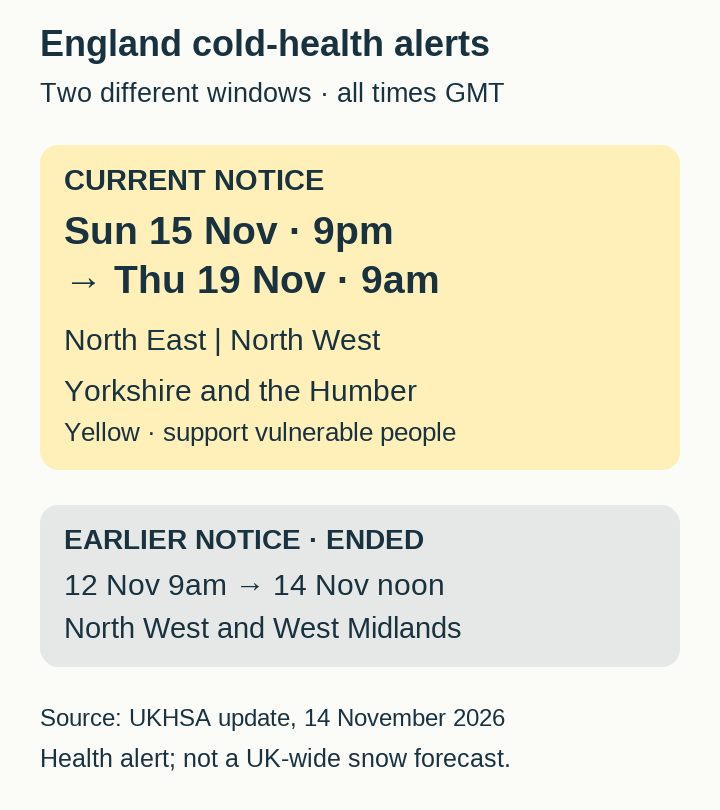
Which warning applies now
The new notice differs from the first alert of this winter. That earlier warning covered the North West and West Midlands from 9 am on November 12 until noon on November 14. The West Midlands is not among the three regions in the November 15–19 notice; an old headline can therefore send readers to the wrong period.
Yellow means cold may particularly affect vulnerable people even when most people are unlikely to be affected. UKHSA highlights people aged 65 or over, people with existing conditions including heart or respiratory disease, and other vulnerable groups such as people sleeping rough. A yellow health alert is a signal to prepare support, rather than evidence that everybody faces the same risk.
Use the region list alongside local conditions
The UKHSA dashboard shows no cold-health alert for the other six English regions at the time checked. That is not a guarantee of warm conditions or freedom from personal risk. Its health warning serves a different purpose from the Met Office’s UK-wide National Severe Weather Warning Service; readers planning travel should use the appropriate weather forecast too.
For practical preparation, UKHSA’s public guidance recommends trying to heat frequently used rooms, such as bedrooms and living rooms, to at least 18°C. Reducing draughts and wearing several thinner layers can also help. Before the alert starts, check in with vulnerable relatives or neighbours and ask whether they need help obtaining food or medication.
Where to get help before tonight
Heating costs can make this advice harder to follow. The guidance directs people needing energy or financial support to their local authority to find what is available locally, without promising that everyone qualifies for a payment. For health concerns it lists a pharmacist, GP or NHS 111; in an emergency, dial 999.
The current warning points to a specific preparation task: arrange warmth and practical support for vulnerable people in the three named regions before Sunday night. Region, time and individual circumstances matter together. Continue to use the dated UKHSA notice and dashboard for changes, rather than extending an expired alert or assuming that places without an alert have no cold-related risk.
Based on the dated official material and attributed reporting linked below. Scope, timing and unconfirmed conditions are distinguished in the text.
- UKHSA latest cold-health alert update ↗
- UKHSA live cold-health dashboard ↗
- UKHSA keeping warm and well guidance ↗