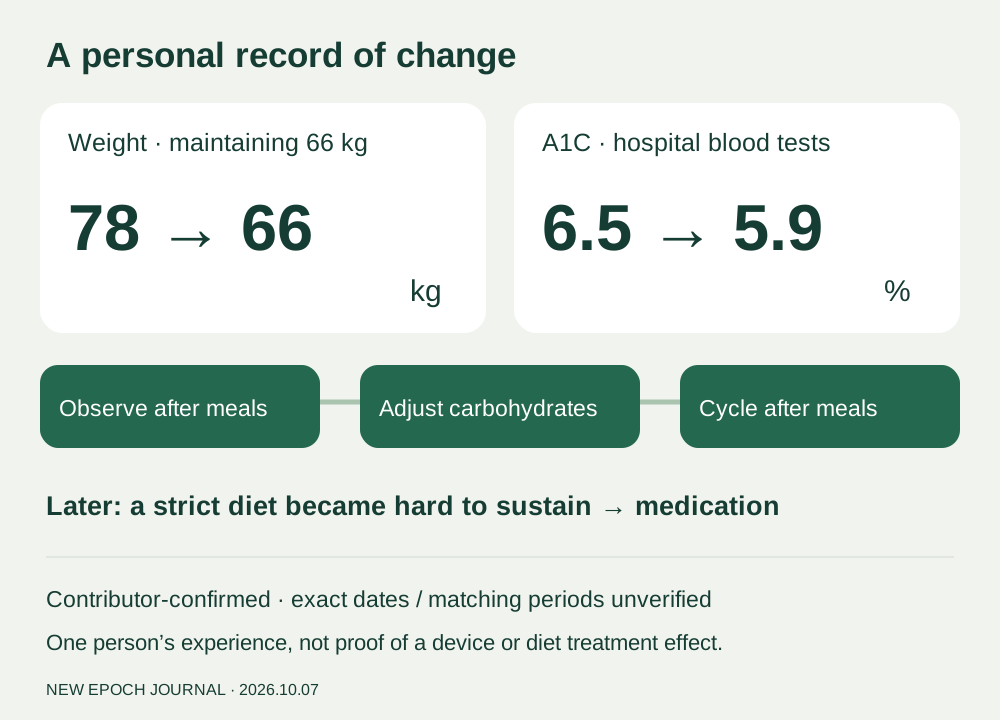
I reduced my weight from 78 to 66 kg and still maintain 66 kg. Hospital blood testing showed my A1C fall from 6.5% to 5.9%. I was not taking glucose-lowering medication when I reached 5.9%. I adjusted carbohydrates, cycled indoors after meals and used a continuous glucose monitor to see how my body responded.
The starting point was being able to see glucose readings. I considered what I ate, whether I moved after a meal and what happened to the readings together. A vague intention became actions I could adjust each day. A glucose chart I uploaded to Gemini at the time preserves a record of that period.
Seeing the readings made the next action more concrete
My personal aim was to adjust meals to keep glucose below 140 mg/dL. I changed carbohydrate intake and used an indoor bicycle after meals. The monitor helped me observe responses to food and activity. The things I actually changed were eating and movement.
When I uploaded the chart on January 13, 2026, I wrote that I had closely followed dietary changes and exercise within 30 minutes after meals for about a month. Another conversation recorded a day with about 40 minutes of low-intensity indoor cycling. I connected meal management and exercise into a post-meal routine.
A 30-day display recorded average glucose of 128 mg/dL
The chart covers December 15, 2025, through January 13, 2026. It displays average glucose of 128 mg/dL and data available for 29 of 30 days. The measurement screen I uploaded at the time provides a record alongside my recollection.
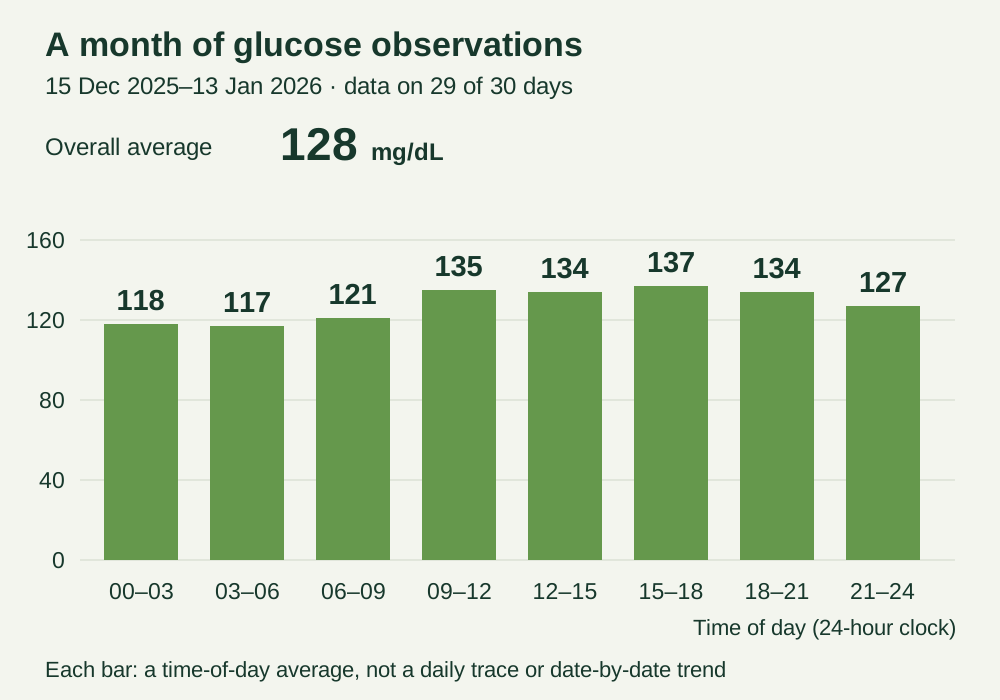
The three-hour averages, starting at midnight, were 118, 117, 121, 135, 134, 137, 134 and 127 mg/dL. Daytime and afternoon averages were higher than those in the early morning. The record shows the time-of-day patterns I was observing while adjusting daily routines.
These bars pool readings from the same time periods across 30 days. They are neither one day’s glucose trace nor a date-by-date improvement chart. Averages below 140 do not establish that every reading stayed below 140. Individual records are needed to examine highs, lows and responses to particular meals.
A 12 kg weight change and A1C of 5.9% before medication
The weight difference was 12 kg. An April 2026 conversation also records the change from 78 to 66 kg, and I remain at 66 kg in October. A1C fell by 0.6 percentage points, from 6.5% to 5.9%. The 5.9% was a hospital blood-test result, not an estimate from the monitor’s app.
I used real-time readings to adjust daily routines and hospital testing to assess glucose over a longer period. NIDDK explains that A1C reflects average glucose over roughly three months. A CGM estimates glucose in the fluid between cells to show trends. These records serve different purposes; the 30-day chart above was not converted into the laboratory result of 5.9%.
The concrete achievement in my experience was turning observation into action and seeing changes in weight and test results. Food, exercise and monitoring changed together, so this account does not isolate the effect of any one element.
Maintaining the result also had to fit everyday life
After weight loss came the question of maintenance. Restricting food and fitting in exercise after meals took time and effort. An April conversation records my concern that the burden was interfering with daily life. Better numbers and a routine that can be sustained are different questions.
I reached A1C of 5.9% without medication, then started medication because the strict diet was difficult to maintain. Both the earlier result and the later change in management are part of my experience. I currently maintain 66 kg; current A1C is a separate matter for testing.
What I gained was a more concrete way to change daily routines
The useful process was observing my response and changing what I did next. Connecting food amounts and types, activity times and readings made management concrete. I used the information to adjust meals and post-meal routines.
The blank worksheet below helps organize those observations. It includes meals, activity, measurement methods, values, test dates, difficulties with maintenance and questions for a clinical appointment. Completed records stay on the reader’s device and are not uploaded to this site.
The 140 mg/dL aim and exercise duration describe my own management and practice. Readers should agree their own targets and treatment with clinicians. This account describes what changed when I put measurement information into daily practice; it does not establish a device as a universal solution.
First-person experience of UPMI’s operator, edited by the publication. Weight, hospital A1C and the medication sequence were confirmed by the contributor. The average-glucose screen covering December 15, 2025–January 13, 2026 was directly inspected in the Gemini attachment. The weight-loss interval and A1C test dates have not been separately established. The article chart redraws the displayed values; AI medical responses were not used as evidence. General explanations draw on NIDDK. A personal account cannot establish a general treatment effect; Asan Medical Center notes insufficient evidence for CGM use solely for weight loss in people without diabetes. New Epoch Journal is operated by UPMI and displays advertising.
- NIDDK · The A1C Test & Diabetes ↗
- NIDDK · Continuous Glucose Monitoring ↗
- Asan Medical Center · CGMs and use for weight loss (Korean) ↗