Joe Biden urged students to debate disagreements and vote in an October 13, 2026 op-ed for The Review, the University of Delaware’s independent student newspaper. The publication explicitly says his opinions are his own.
Coverage of the former president’s message has prompted a simpler follow-up: what kind of statement is this? Reading the original, including its ending, helps separate its argument from an institutional decision.
What he asks students to do
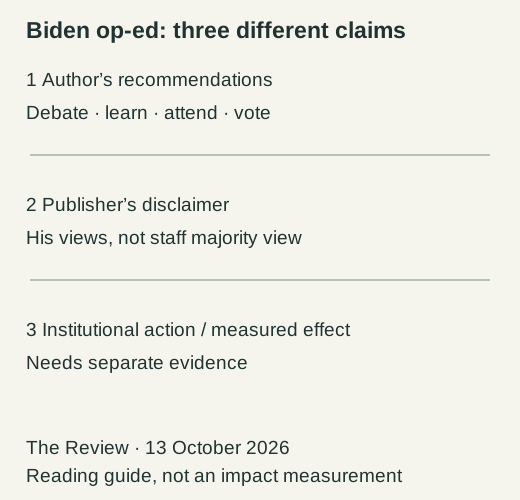
Biden recommends engaging with opposing views, studying democracy and leadership, attending campus events and voting. He addresses students as future citizens and also asks professors to prepare future leaders.
He recalls his education and argues that young people can respond to political division. Those recollections explain his perspective; the appeal itself does not measure whether readers subsequently change their behaviour.
What the disclaimer changes
The Review identifies the piece as an op-ed by Biden, a 1965 alumnus. Its closing note says the opinions do not represent the majority view of the paper’s staff. Publication therefore should not be presented as staff endorsement.
A useful reading test separates a named author’s recommendation, a publisher’s decision to carry it and a documented result. These are different claims requiring different evidence. A persuasive essay can establish what its author argues without establishing that the argument has worked.
How to read the complete statement
The linked original contains both the byline and closing disclaimer. Read those alongside the body before treating a circulating excerpt as a university announcement. An opinion column does not by itself establish a course requirement, a new programme or an election rule.
The next meaningful evidence would concern an actual institutional decision or observed response, if either occurs. Until then, the clear answer is an appeal from a named former president to a student audience. Keep its authorship and the publication’s stated limits attached to any summary.
Biden’s October 13 original op-ed and The Review’s closing disclaimer were read directly and compared with the upper news report. This article explains authorship and evidence boundaries; it does not endorse a political position or claim an observed policy outcome.
AI assisted with drafting and editing. This article is part of our preview edition. Editorial standards & corrections →