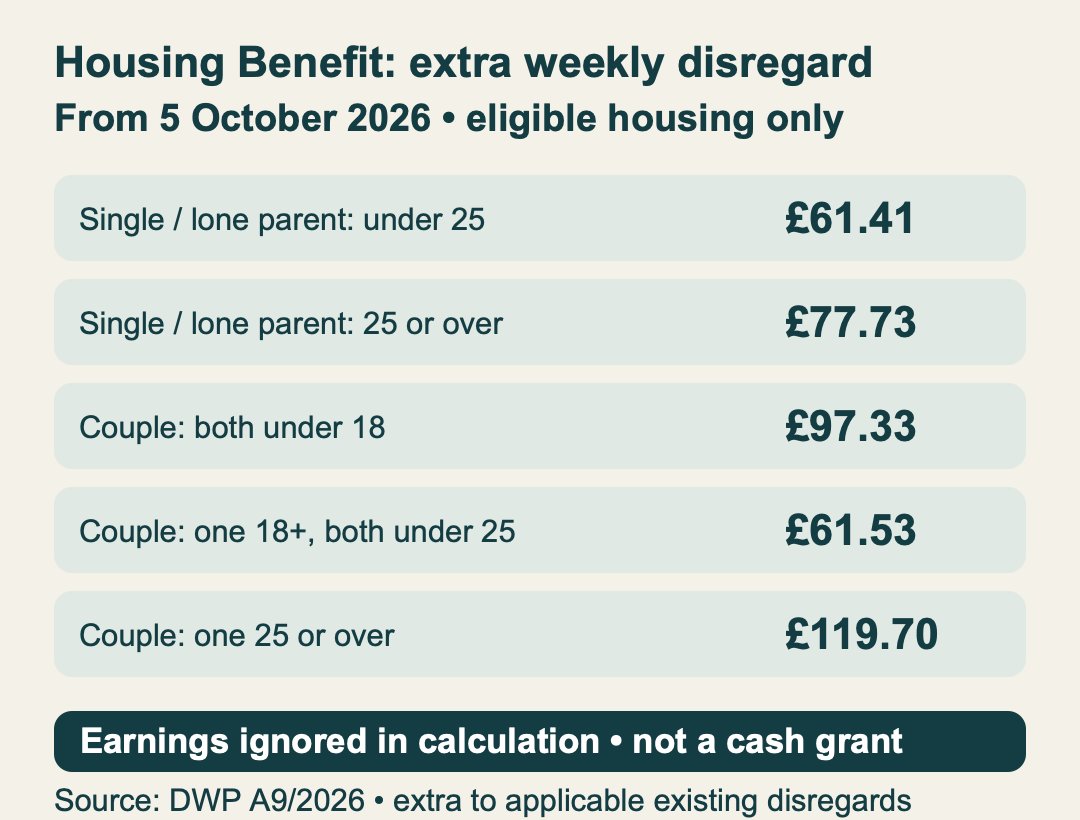
New Housing Benefit rules took effect on 5 October 2026 for working-age residents in specified supported housing or temporary accommodation. The additional weekly earnings disregards range from £61.41 to £119.70, depending on household and age. These are amounts of earned income ignored when calculating Housing Benefit, rather than a cash grant paid on top of a wage.
DWP announced the commencement on 5 October. Its detailed A 9/2026 guidance, updated 24 September, explains why the change matters: people receiving Universal Credit for living costs and Housing Benefit for rent could face overlapping reductions as earnings increased. When Universal Credit ended, moving to Housing Benefit alone could leave some workers with less overall income. The new disregard addresses that transition.
The five additional weekly amounts
For a single person or lone parent under 25, the additional disregard is £61.41 a week; at 25 or over it is £77.73. For a couple both under 18 it is £97.33. Where at least one partner is 18 or over but both are under 25, it is £61.53. Where at least one partner is 25 or over, it is £119.70. The amounts are weekly and should not be mistaken for a fixed monthly award.
The disregard is added to applicable existing standard and other earned-income disregards, but the total disregarded cannot exceed the earnings available. It therefore does not promise that every claimant’s benefit rises by the listed amount. The actual Housing Benefit calculation still depends on earnings and the other rules that apply to that household.
Accommodation and age decide eligibility
The guidance covers employed and self-employed working-age residents in the specified accommodation categories, without a minimum working-hours requirement. It does not extend this new disregard to every private tenant, every Universal Credit recipient or every person living in any property described informally as supported housing. The relevant Housing Benefit accommodation classification matters.
Local authorities apply the disregard to eligible new and existing Housing Benefit awards automatically. This is not a new general application for a separate DWP payment. Claimants still need to report earnings, employment, household and accommodation changes in the usual way. If a calculation seems wrong, compare the household category and reported earnings with the council’s award notice.
Use the council’s Housing Benefit route
For a new claim, GOV.UK’s Housing Benefit claim page directs eligible applicants to their local council and explains that most people otherwise claim Universal Credit. Start with that official route, supply the requested evidence and identify whether the home qualifies as temporary or specified supported accommodation. Existing claimants can ask the council how the 5 October disregard has been reflected in their calculation.
GOV.UK also explains the route to ask for a benefit decision to be looked at again or appeal when appropriate. The useful follow-up is the calculation and its effective date, rather than treating a headline amount as guaranteed extra spending money. DWP says these disregards will be reviewed through annual uprating; subsequent changes should be checked against the dated official guidance.
Official dated material directly read; claims and evidence mapped in review checkpoints.
- DWP:5 October commencement announcement ↗
- DWP A9/2026: conditions and weekly disregard amounts ↗
- GOV.UK: Housing Benefit claim and review route ↗