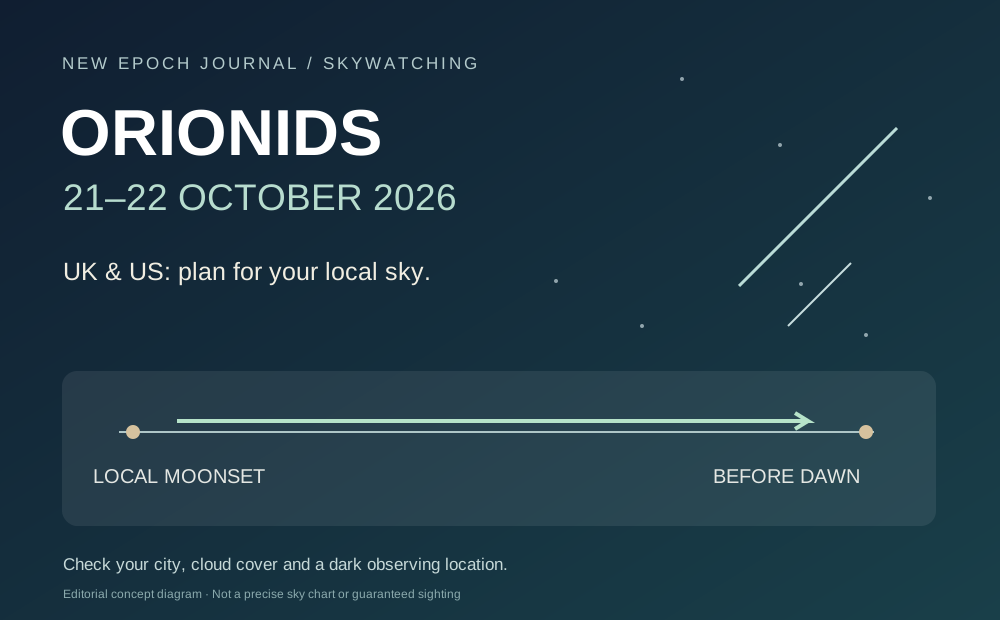
For Orionid watchers in the UK and US, the night of 21 October into 22 October is the date to plan around. NASA identifies that peak night and recommends the hours before dawn after moonset: a bright Moon may hide fainter meteors this year.
Do not copy a British clock time into an American viewing plan. Check when the Moon sets and dawn begins at the place where you will actually watch.
The start of the shower is not its peak
The Royal Observatory Greenwich lists the 2026 active period as 2 October to 7 November. Activity begins well before the peak, and there can be viewing opportunities for several days around it.
A headline saying ‘meteor shower tonight’ is therefore not enough to plan a trip. Check the year and peak date, and allow for moonlight during this year’s maximum.
Find your local viewing window
In the UK, start with Greenwich’s October guide, then check moonset and weather for your chosen location. In the US, pair NASA’s guidance with an astronomical timetable set to your own city.
Timeanddate lists the peak as 21–22 October for New York and lets readers change location. Its New York times are not a nationwide US timetable. This guide does not establish the best clock time or cloud conditions for every city.
Darkness and a wide view matter more than equipment
The Orionids occur as Earth encounters debris left by Halley’s Comet. Their name describes the direction from which the meteors appear to spread. NASA advises watching a broad area of sky rather than staring at one point in Orion.
You do not need a telescope. Move away from artificial lights, let your eyes adapt and avoid repeatedly checking a bright phone screen. Greenwich’s guide of roughly 15 meteors an hour is not a promise that every observer will count that many.
Before you leave
Choose your location and date, check local moonset and dawn, then review the cloud forecast. Bring warm clothing and somewhere comfortable to sit while waiting.
This is not a performance that starts everywhere at a fixed hour. For 2026, choosing the peak night is only part of the plan: leave time to watch when moonlight has faded.
Based on NASA, Royal Observatory Greenwich and location-based astronomical information checked on 2 October 2026. No local weather forecast, city-specific moonset time or successful sighting is guaranteed. The viewing guidance concerns the UK and US, not Korean local times.
- NASA · October 2026 Skywatching Tips ↗
- Royal Observatory Greenwich · Orionids 2026 ↗
- NASA · Orionids Meteor Shower ↗
- timeanddate · Orionids 2026 / location-based sky map ↗
- Royal Observatory Greenwich · October 2026 sky highlights ↗