The US Social Security Administration has confirmed a 3.6% cost-of-living adjustment for 2027, with higher Social Security benefits payable in January. Its October 14 announcement puts the average retirement-benefit increase at $75 a month. Higher Supplemental Security Income payments for January are scheduled for December 31, 2026.
For readers in India who already receive US benefits or help a beneficiary, this announcement changes the amount to plan around next year, rather than creating a new Indian entitlement. The practical questions are when an individual’s increase arrives, what deductions leave in the payment, and whether their existing benefit can continue while they live abroad.
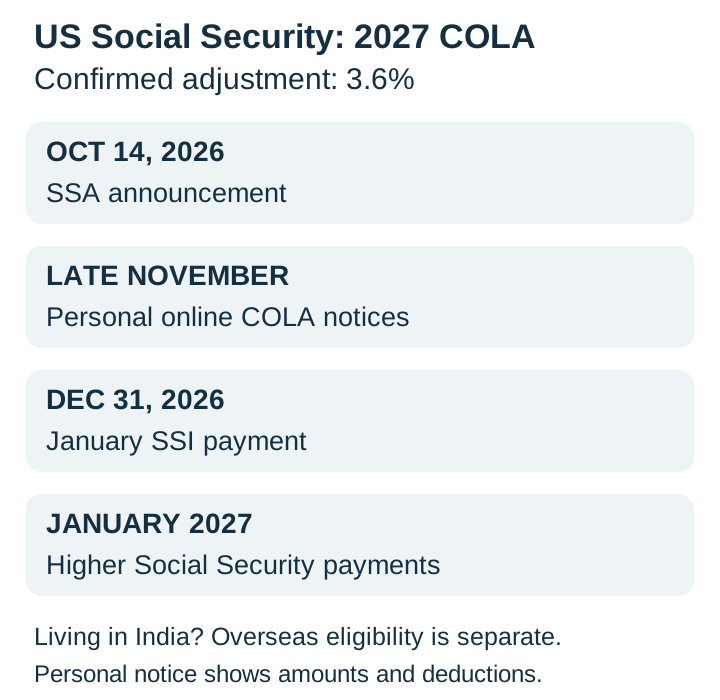
A confirmed rate with two payment dates
The adjustment follows the change in the US CPI-W price index from the third quarter of 2025 to the third quarter of 2026, according to SSA’s fact sheet. It is an annual US benefit adjustment based on that comparison. It does not measure an individual household’s inflation in India.
Social Security’s increased December 2026 benefit is payable in January 2027. SSI has a different timing: its January payment is made at the end of December because January 1 is a holiday. The December 31 date therefore does not mean every Social Security beneficiary receives the higher amount before New Year.
An average rise is not a personal bank-deposit figure
SSA estimates the average monthly retired-worker benefit will move from $2,095 to $2,170. Those are agency averages before and after the COLA, not the amount promised to every person. A bank deposit also depends on applicable deductions; an Indian-rupee receipt can additionally vary with conversion and transfer conditions, which this report does not price or forecast.
The personal COLA notice provides the new benefit amount, deductions and dates. SSA says online notices begin in late November through my Social Security, while people not enrolled in paperless notices receive them by mail in December. The agency separately directs Medicare users to its later premium information, so a gross adjustment alone cannot establish the final net payment.
For beneficiaries living in India, eligibility comes first
SSA’s Payments Outside the United States page links its Payments Abroad Screening Tool. For non-US citizens, the general rule can stop retirement, survivor or disability payments after six calendar months abroad, but exceptions may permit continued payment; citizenship, benefit type and circumstances matter. The page also requires Form SSA-21 for noncitizens outside the US for at least 30 consecutive days. SSI has separate absence restrictions, so the overseas rule for one programme should not be applied automatically to another.
The confirmed change is a 3.6% US adjustment beginning with the stated 2027 benefit payments. For an existing beneficiary in India, a reliable budget pairs the individual COLA notice with an overseas-payment eligibility check through SSA’s official route. The headline rate establishes the adjustment, but does not by itself establish eligibility, a net dollar deposit or an equivalent rise in rupee purchasing power.
SSA’s October14 announcement, 2027 factsheet, actuarial explanation and official overseas-payment guidance were checked. The US adjustment does not create an Indian pension entitlement. Personal notices and overseas eligibility remain separate; no individual eligibility determination was made. The timeline is original.
- SSA October14 official COLA announcement ↗
- SSA 2027 COLA fact sheet ↗
- SSA payments outside the United States ↗
- SSA SSI absence regulation ↗
- SSA latest COLA calculation and holiday timing ↗