The Draconids remain active through October 10, although the main predicted peak has passed. Timeanddate places it around 01:00 UTC on October 9: 2 am BST in London that day, 9 pm EDT in New York on October 8, and 6 pm PDT in Los Angeles. Those are conversions of a forecast instant, not guaranteed viewing appointments. Local darkness is essential.
October 8–9 was the principal viewing night for this annual shower. A UK listing dated October 9 and a US guide recommending October 8 can therefore describe the same event. Royal Museums Greenwich lists activity from October 6 to 10 and advises evening viewing; timeanddate’s updated guide supplies the approximate UTC peak. This distinction helps readers who are still searching after the peak forecast.
One predicted peak, three local clocks
| Place | Forecast peak, local date/time | Viewing condition |
|---|---|---|
| London | Oct 09, 02:00 BST | Wait for local darkness; forecast is approximate |
| New York | Oct 08, 21:00 EDT | Wait for local darkness; forecast is approximate |
| Los Angeles | Oct 08, 18:00 PDT | Wait for local darkness; forecast is approximate |
Timeanddate forecast around 01:00 UTC October 9; main forecast peak has passed. Activity throughOctober 10 does not promise the same rate.
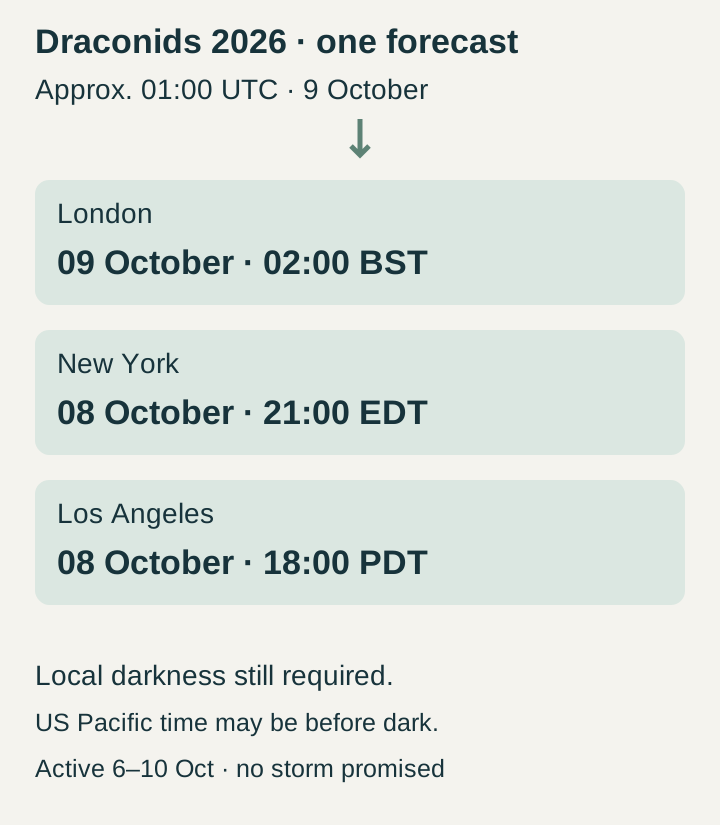
Why the evening matters
The meteors come from debris shed by comet 21 P/Giacobini-Zinner. Their apparent starting point, or radiant, is in Draco, high in northern skies around nightfall. That geometry makes the Draconids an evening opportunity, unlike showers commonly watched after midnight. You can see a meteor elsewhere in the sky; finding Draco precisely is not a requirement.
For western US viewers, the forecast peak can fall before full darkness. A 6 pm Pacific conversion therefore does not establish good visibility at 6 pm. Use the location-specific sky map linked in timeanddate’s guide and check sunset, darkness and cloud conditions for your actual observing site. The peak time and the best usable local viewing window are different things.
A dark sky improves the chance, not the promised count
With new moon on October 10, bright moonlight is less of an obstacle this year. Cloud and artificial light can still prevent a sighting. The Draconids are normally modest, and timeanddate says no surge is expected in 2026. Historic storms are background to the shower’s variability, not evidence that this year will produce one.
Choose a safe, open location away from strong lighting. Allow your eyes to adapt, avoid repeatedly checking a bright phone, and bring warm layers. Royal Museums Greenwich recommends naked-eye viewing rather than a telescope or binoculars, which restrict the area of sky you see. These steps improve observing conditions without guaranteeing a meteor.
What to do after the forecast peak
If it is still dark and clear locally, there may still be an opportunity within the October 6–10 activity period. Expect less certainty after the main forecast peak. In the UK, a plan for the evening of October 9 should be described as remaining activity, not a second forecast maximum. Check the dated local sky map before travelling.
Judge the trip by darkness, cloud cover and a safe viewing location, rather than expecting a timed spectacle. The useful follow-up is a revised forecast or actual observing reports. A photograph of a spectacular meteor would not prove what a reader will see; our diagram instead explains the UK–US date difference.
The 2026 RMG and dated Timeanddate forecast were read. UK/US local-clock conversion is approximate forecast timing; darkness and remaining activity are separate conditions.
AI assisted with drafting and editing. This article is part of our preview edition. Editorial standards & corrections →