The UK’s Be Ready advice asks households to keep three days of bottled water and food that does not need refrigeration or cooking. Its drinking-water allowance is 3 litres per person per day: 9 litres for one person, 18 for two or 36 for four over three days. Water for cooking and washing is extra. The government says to build supplies gradually as circumstances allow, starting with what is already at home.
The updated advice was launched on 22 October 2026 as part of a three-year campaign. In a statement to Parliament, security minister Dan Jarvis cited storms and wildfires disrupting power, water, phones and the internet. The practical issue is how a household manages while ordinary services are interrupted. The advice does not give a date for an imminent emergency or instruct everyone to make a large purchase at once.
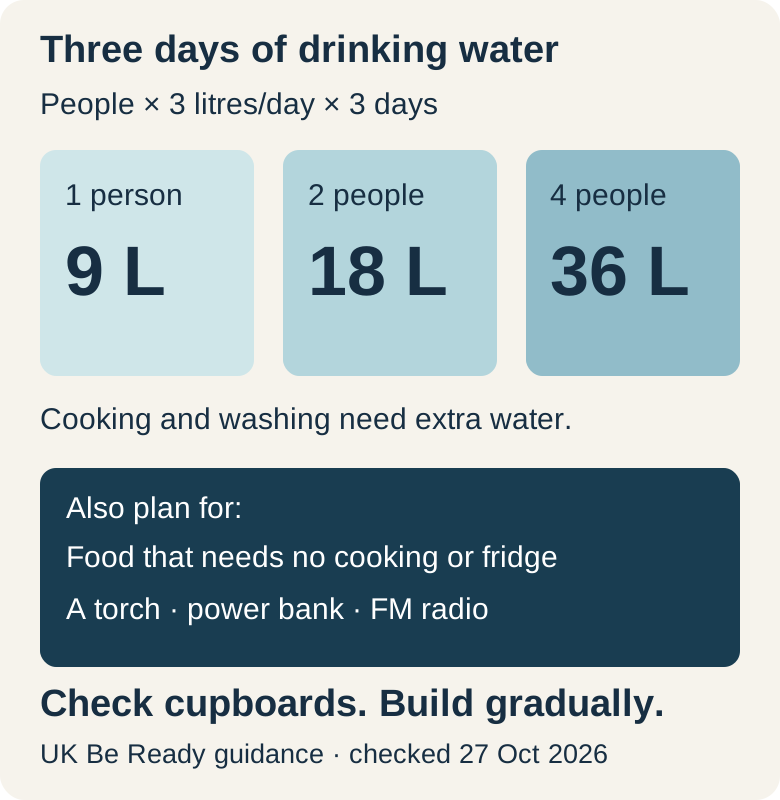
Turn three days into household quantities
The water calculation is household size multiplied by 3 litres and then by three days. For two people that is 2 × 3 × 3 = 18 litres solely for drinking. A stock count should therefore separate drinking supplies from extra water for other uses. The checklist also asks households to account for pets and personal needs, rather than assuming one standard shopping basket fits everyone.
For food, the official recommendation is a three-day supply of familiar, long-life items that can be used without refrigeration or cooking. That matters because a full freezer does not answer every question during a power cut. Check the cupboard before adding items to normal shopping, and consider whether anything needs a tin opener or other equipment. The campaign recommends reviewing expiry dates every six months.
Plan for light, information and contact
A torch and spare batteries, a charged power bank and a battery-powered or wind-up FM radio cover different failures. A torch supplies light, the power bank can extend phone use, and a radio provides another way to receive information. Warm clothes, blankets, toiletries and a first-aid kit also appear on the checklist. The government prefers torches to candles; it gives no universal cash amount, although cash is included alongside payment cards.
Preparation also includes people and information. Write down important telephone numbers and useful radio frequencies, agree where household members would meet if they could not contact one another, and consider who could check on a neighbour. These steps have value even before a supply box is complete. Keep the plan where household members can find it, rather than relying entirely on one phone.
Use the support route and build gradually
For additional help during utility disruption, the campaign directs people in England, Scotland and Wales to the free Priority Services Register at thepsr.co.uk. Its official page provides the separate Northern Ireland Customer Care Registers route. Open the Be Ready checklist linked below, assess the household’s needs, then follow the relevant registration information. Emergency services will still respond; household preparation is intended to help responders prioritise people most in need.
The useful test is whether the household can drink, eat, stay warm and receive information during a short disruption. Buying a large quantity of one item does not cover the others. The three-day guide provides a planning horizon, while the per-person water calculation and an inventory of existing supplies turn it into manageable actions. Revisit that plan as household needs or official advice change.
Checked against the linked official sources on 27 October 2026. Plans, confirmed conditions and unverified details are distinguished.
AI assisted with drafting and editing. This article is part of our preview edition. Editorial standards & corrections →