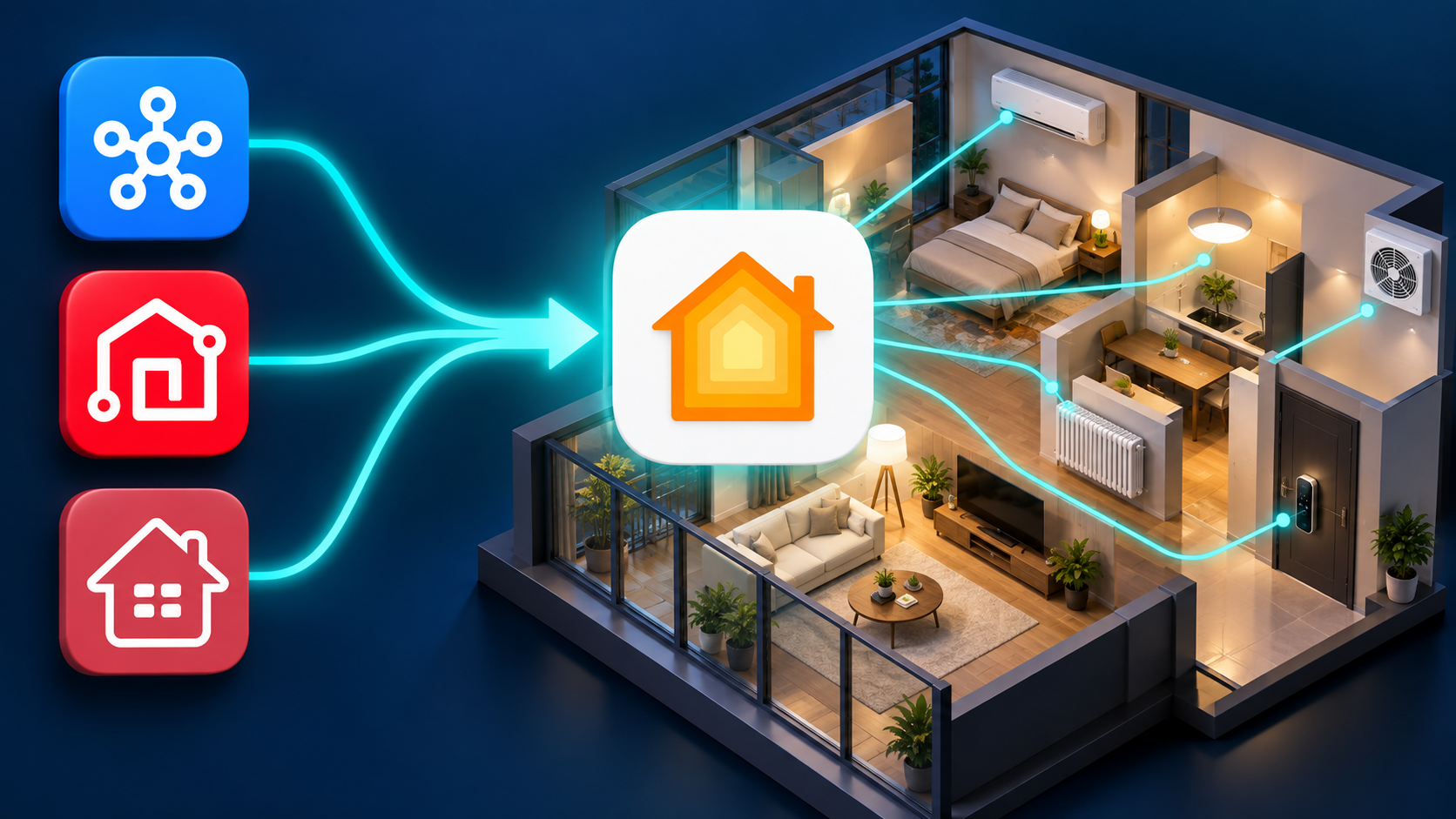
South Korea is home to Samsung and LG, two global appliance manufacturers. Consumers have plenty of products to choose from. Yet once those products enter the same home, their freedom to connect them narrows. An air conditioner uses Samsung SmartThings, other appliances use LG ThinQ, and lighting and heating run through the apartment’s wall-mounted controller. The devices share a living space, but their controls follow the boundaries of manufacturers and building systems.
It is possible to open each app and switch each device on. But if that is all a smart home can do, the wall switch and handheld remote have merely moved onto a phone. Remote control is useful; making devices work together around everyday life is a different ambition.
Some consumers are beginning to close that gap themselves. Instead of waiting for manufacturers to connect their products or buying replacements, they are working with AI agents to build software bridges between existing devices. UPMI Lab’s HomeKit project illustrates both the connection problem hidden behind competition over appliance performance and the changing role of the people who use those appliances.
Choosing a product is not the same as choosing its connections
Buying within one brand can make registration and management easier. That is a real advantage of an integrated platform. It can also make compatibility with an existing app a deciding factor in the next purchase. When access to an ecosystem matters more than an appliance’s own performance, matching brands becomes a way to avoid integration costs, not simply a preference.
Apartment infrastructure offers even less choice. Residents inherit the wall controller and lighting, heating and ventilation systems installed before they move in. Add separately purchased appliances and a smart lock, and three or four control systems can coexist in one home. That was the situation in the home integrated by UPMI Lab.
The inconvenience is not simply the number of app icons. Cooling and heating in the same room may be controlled separately, while connecting ventilation and lighting to a shared condition becomes difficult. Individual products have become smart, but coordinating the home remains a human task.
Open standards meet homes that already exist
Manufacturers have not ignored interoperability. In 2023, Samsung and LG announced cross-brand appliance connectivity based on the Home Connectivity Alliance specification. Matter is another common standard intended to connect devices from different companies. Describing the manufacturers as willing to connect only their own products would overlook these efforts.
The arrival of a standard, however, does not make every installed device compatible. The Connectivity Standards Alliance explains that support for existing products depends on their technical capabilities and on manufacturers providing updates. More new Matter products do not automatically give older appliances and apartment controllers a common language.
Replacing working devices with compatible models can address part of the problem. Integration with shared apartment infrastructure may still remain. Why should consumers who have already bought their equipment pay again to overcome missing connections? That is a question the smart-home market needs to answer.
Interoperability cannot depend solely on corporate goodwill or the technical skills of individual residents. Progress should be judged not only by the number of supported brands, but also by how long products already sold can remain connected and useful.
A third option, built with an AI agent
UPMI Lab kept the existing devices and built its own connections. Software running on a network-attached storage system, or NAS, translated different device signals into states and commands that Apple Home could handle. AI agents helped analyze communications, write and revise code, and check operation.
Lighting, heating and ventilation integration began by observing the wall controller’s communications. Comparing the signals produced when a light was switched on or a temperature changed helped distinguish commands from status reports. A Samsung air conditioner without Matter support was connected through the SmartThings developer API. Apple Home could then present cooling and heating, despite their different communication paths, as controls for the same room.
The clue to the shared building entrance was the kitchen monitor. If it could receive an entrance call and release the door, the necessary signals already reached that location. The control and video paths were connected separately and processed on the NAS for Apple Home. The result brought lighting, heating, cooling and ventilation together with entrance video and controls for both the apartment door and the shared entrance.
The resident chose a way for the home to operate, rather than a new set of appliances. Existing equipment and personal needs became the starting point, instead of a product bundle defined by one manufacturer.
From user to builder
People were connecting their own devices long before AI agents arrived. Open-source projects such as Homebridge and their communities provided much of the foundation. Understanding communications, modifying software and resolving failures nevertheless demanded considerable knowledge and time.
AI agents change how a person can participate. The user describes desired behavior and the situations that cause trouble; the agent helps turn those requirements into code and settings. Testing the result and giving feedback leads to the next revision. Explaining an intention becomes more closely connected to building an operating system around it.
This project still relied on an operator who understood the equipment and could verify the result. AI did not remove every technical barrier. It did demonstrate that a consumer’s role can extend beyond choosing products to designing and modifying their behavior.
This is a form of being a prosumer: someone who both consumes and produces. The resident is not manufacturing the air conditioner. What they produce is the set of connections and rules that makes equipment work together at home. They begin to redesign an experience previously supplied by a brand.
Who gets to define a smart home?
An integrated home could make daily life, rather than individual products, the organizing principle of automation: lighting up the living room as it gets dark, starting cooling and ventilation together on a summer arrival, or adjusting overnight cooling against indoor and outdoor temperatures. For the resident, devices from different manufacturers belong to one situation.
UPMI Lab has implemented device integration and the collection and display of air-quality sensor readings. Local AI control that combines multiple conditions in natural language, and demonstrated energy savings, remain work to implement and validate. The Samsung air conditioner still depends on the SmartThings cloud. Consumer-led integration currently operates on top of manufacturer services and existing technology.
That does not make the change insignificant. Consumers now have an option to build and revise a connection rather than wait for the next manufacturer update. As that option expands, companies can be judged increasingly by how well they support the connections people want, not just by how effectively they keep users inside an ecosystem.
A home is not a showroom for several appliance brands. It is one place in which a person’s life unfolds. The next test for a technology powerhouse is not how many devices it calls connected. It is whose needs those connections serve, and who can change them. Consumers designing their homes with AI agents are beginning to offer an answer.
Analysis based on UPMI Lab’s implementation records and public material from manufacturers and standards bodies. The discussion of prosumers and market change is the editorial team’s interpretation. UPMI Lab and New Epoch Journal share the same operator, UPMI Co., Ltd. Translated from our Korean edition.
- UPMI Lab · HomeKit integration record (Korean) ↗
- Samsung · Cross-brand HCA appliance connectivity, August 29, 2023 ↗
- LG · Cross-brand connectivity through ThinQ, August 29, 2023 ↗
- CSA · Matter FAQ: existing devices and bridges ↗
- Homebridge · Connecting existing devices to Apple HomeKit ↗