A presentation starts changing as soon as it is finished. Numbers are corrected, photographs replaced and diagrams revised after a meeting. A polished first draft that cannot survive these changes becomes another document that must be rebuilt.
Generative AI can produce an attractive slide quickly. Whether its individual elements can be changed freely is a separate question. If text and diagrams are flattened into one image, editing a single word may require regenerating the whole slide or rebuilding it by hand. Time saved in production becomes work deferred to revision.
A finished image is not a finished document
Not every AI presentation tool exports only images. Some offer editable files and a range of templates. The issue is less about declaring one service superior than about the structure of the output. A PPTX extension alone does not mean that its photographs, text, tables and connectors are separately editable.
This matters particularly in complex operating models and diagrams of organizational relationships. Moving a box must preserve meaningful connections; replacing a photograph should not disrupt column widths and captions. The appearance of the first draft reveals little about the cost of the next change.
Building the document, not just drawing it
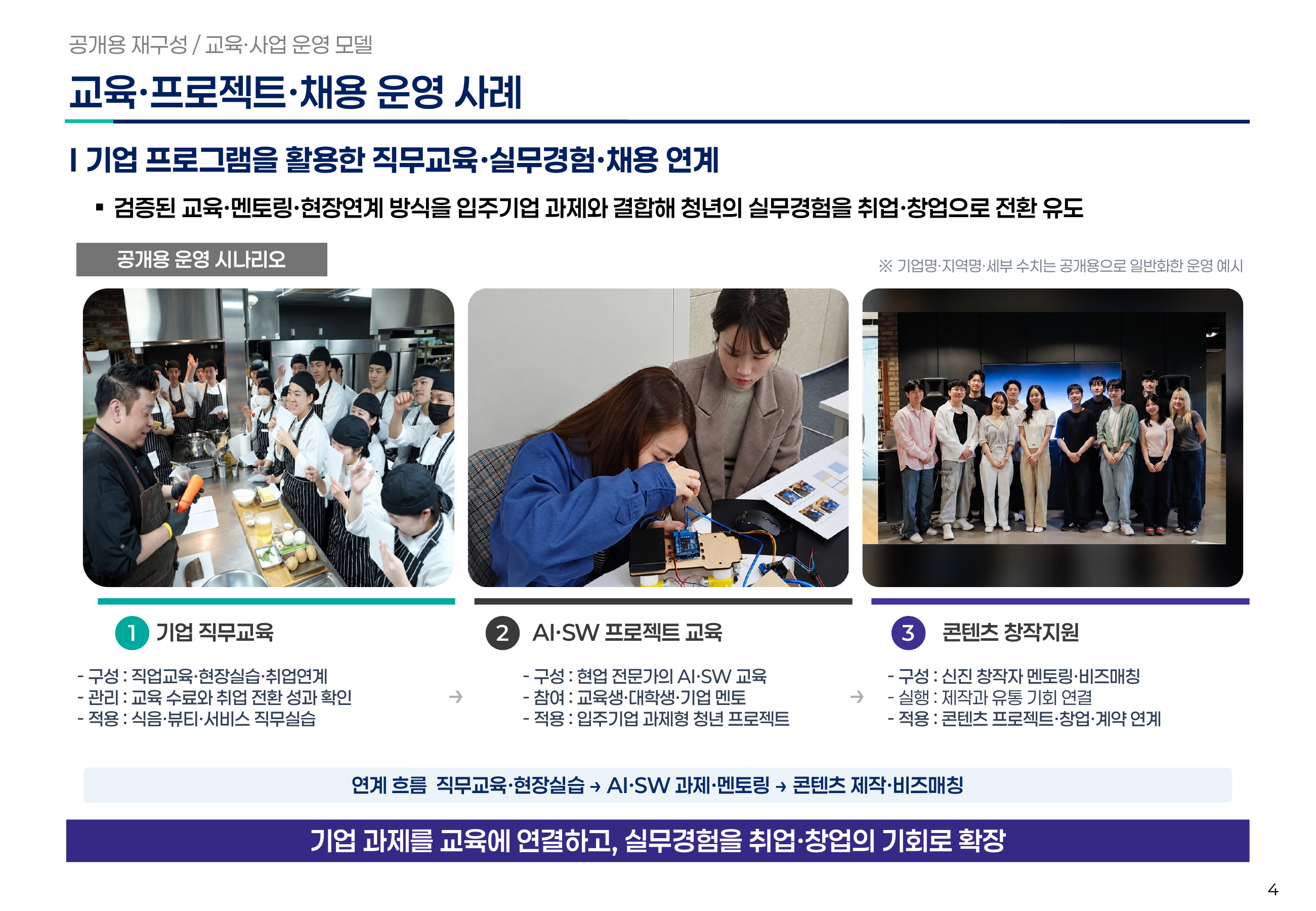
While preparing meeting and submission materials for a project in Sang-dong, Bucheon, UPMI worked with an AI agent to construct slides in code. Content hierarchy, photograph placement and relationships were translated into individual PowerPoint text boxes, shapes and lines.
The case-study and operating-model slides included three photographs with accompanying explanations, as well as diagrams connecting roles and programs. Because the layout was not flattened into a single picture, text, values, colors and positions could be changed independently.
Keeping layout rules in code also made the work repeatable. The same structure could accept new content, or be rebuilt with revised rules. It became possible to specify what should change and what should remain, rather than repeatedly regenerating a slide in the hope of obtaining a similar result.
Productivity includes the cost of revision
Code does not eliminate review. Added text can overflow, and connectors can collide with shapes as a diagram becomes more complex. Rendered slides and editable objects still need checking and revision. Design judgment and factual verification remain the author’s responsibility.
The public material demonstrates this approach. The Lab’s gallery is separate from its downloadable editing example; the public example is not the complete client deliverable.
The change is nevertheless meaningful. The author can work with the rules that produce the document, rather than merely accept an AI output. The value of AI presentations should be measured not only by the speed of the first slide, but also by the effort needed to make the next revision express the intended meaning.
Based on UPMI Lab’s published development and operating records. UPMI Lab and New Epoch Journal are both operated by UPMI Co., Ltd. This is an English translation of our Korean article.
AI assisted with drafting and editing. This article is part of our preview edition. Editorial standards & corrections →