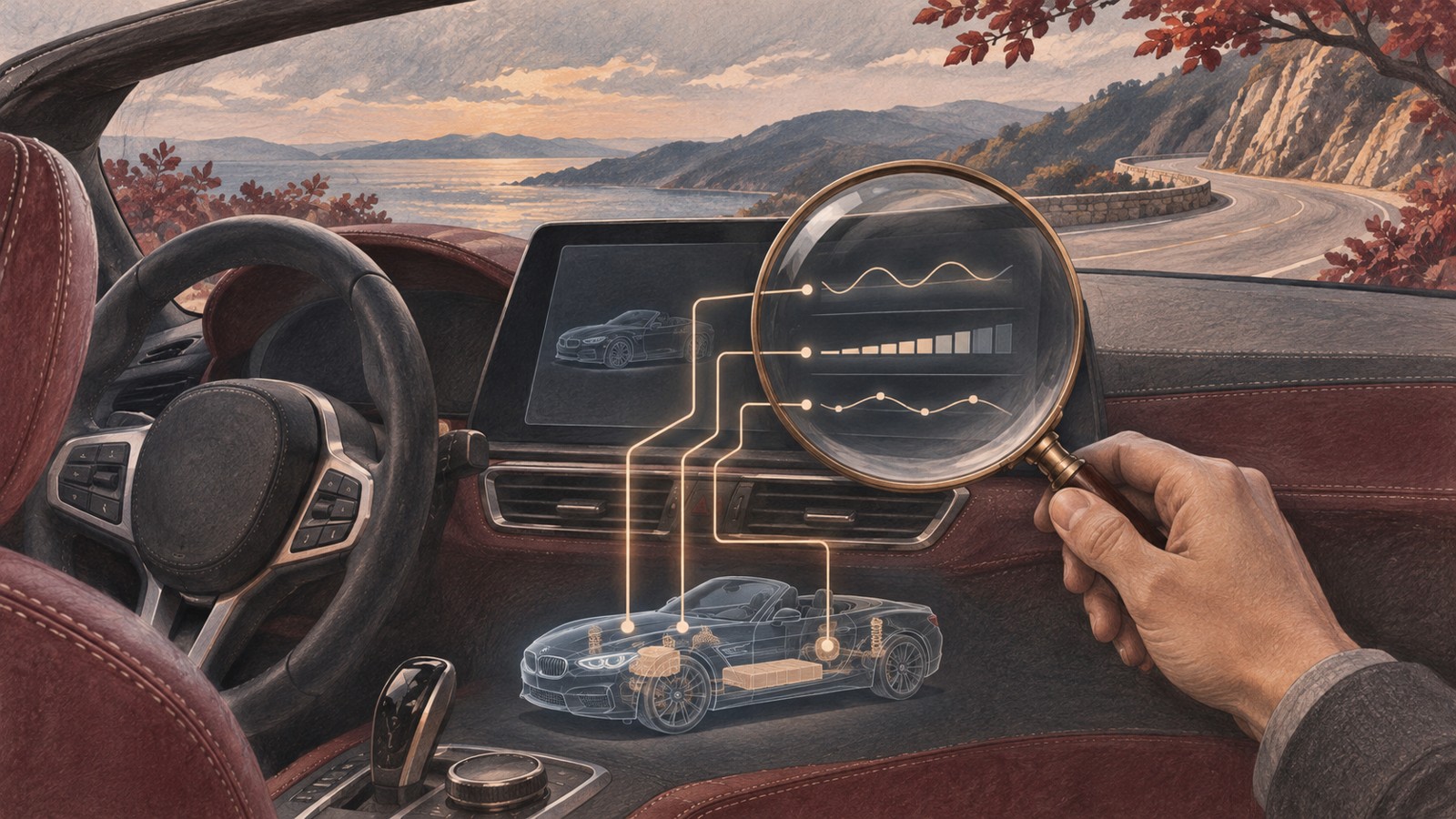
UPMI Lab installed a diagnostics app in a BMW G29 to display control units, fault codes and status on the iDrive screen. The arrangement lets the owner inspect records in the car and retain information for subsequent checks.
Actual vehicle photographs show active codes remaining after a clearing operation. Reading or clearing codes does not resolve their causes or replace all of ISTA’s service, test and programming functions. The case concerns changes in access to diagnostic information rather than repair results.
Making vehicle records easier to access
The installed app displays responding control units, stored codes, status and check-control messages. A check that previously began with preparing a separate tool can now start on the existing screen. When a problem recurs, the owner can inspect the records and retain material for explaining it during later checks.
Easier access does not automate interpretation. Stored histories may combine past records with currently active states. Timing and the range of responding control units also affect the result. Understanding which unit recorded which state is more informative than treating the total code count as the vehicle’s condition.
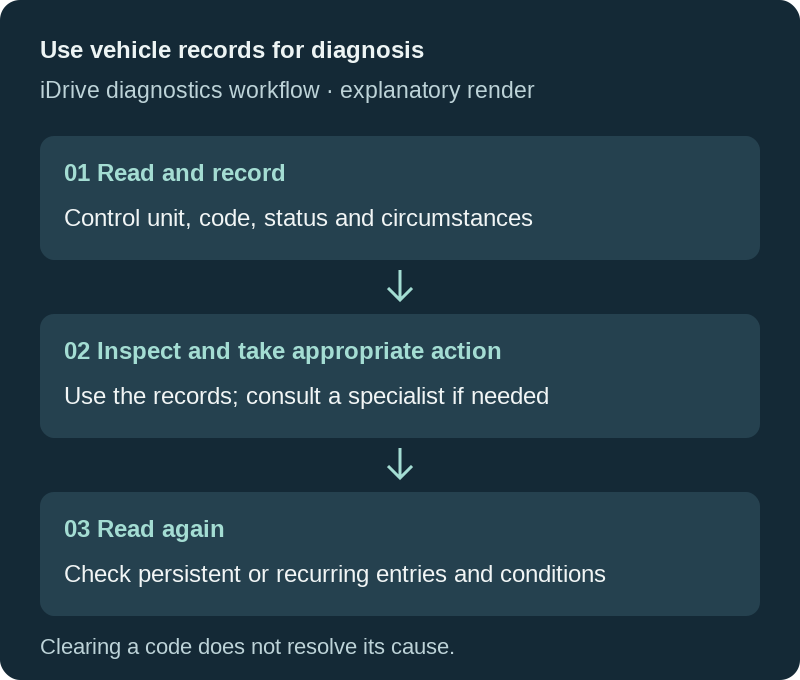
Preserve information before clearing codes
A clear button can make an empty list look like a solution. Actual photographs of this G29, however, show active codes after clearing. A command to erase records does not restore normal operation while a cause persists. Reading codes provides clues for investigating that cause.
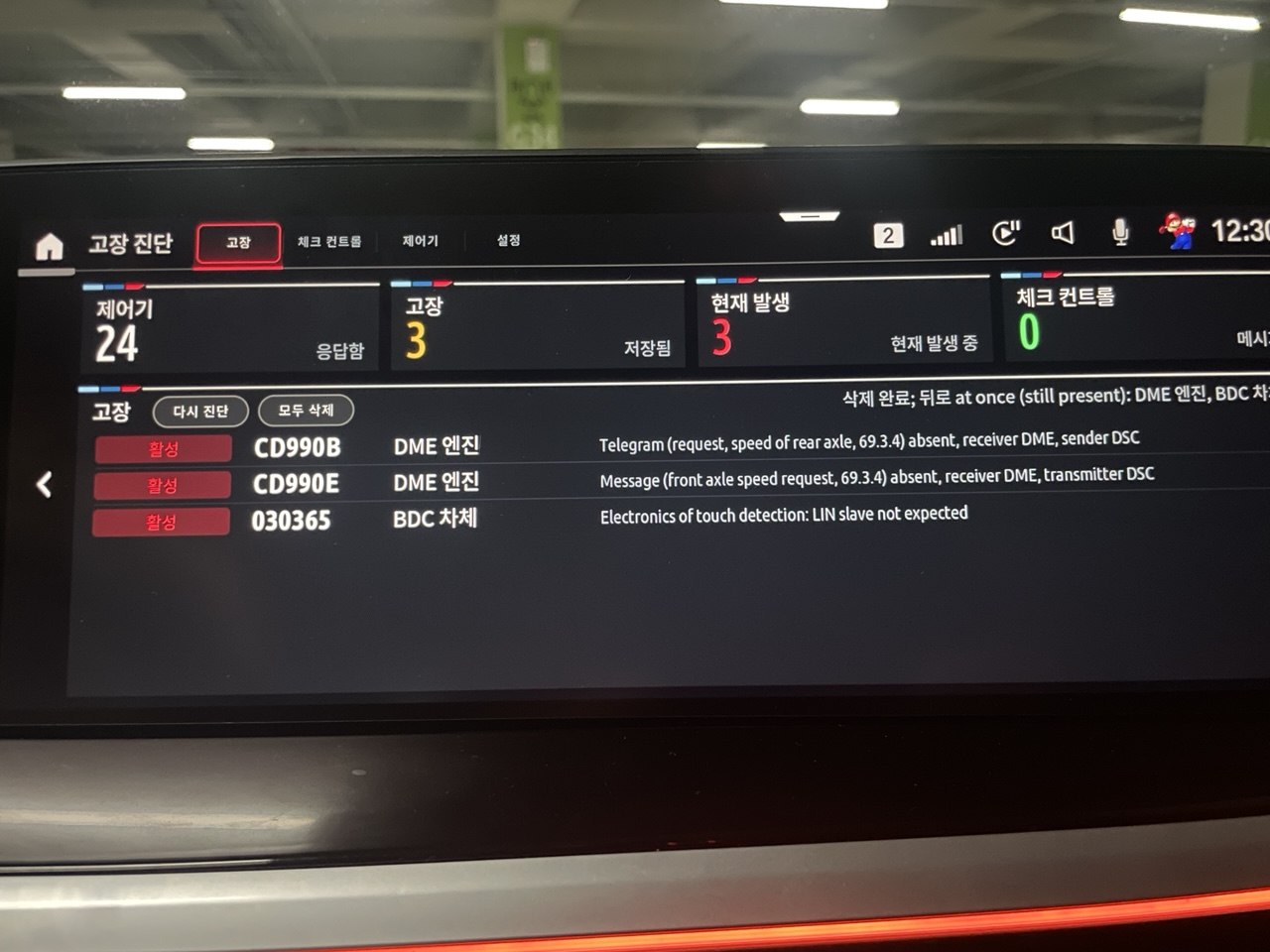
The useful sequence is to preserve codes, control units and status before clearing, then read again after appropriate action. The photographs and Lab video were recorded at different times; differences in their counts are not a controlled before-and-after repair result. The change demonstrated here concerns access and record-keeping, not repair success rates.
Better information can support work with specialists
Direct access to diagnostics provides more material for describing symptoms. Repeated entries and the circumstances in which they occur can be recorded and passed to a specialist. This is not a claim that owners can perform every repair. Nor is the app presented as a replacement for the full ISTA suite of service procedures, test plans and programming.
Collaboration becomes more specific when owners know what they checked and where they need help. Rushing to conclusions because more data is available leaves them exposed to misinterpretation. Understanding both the scope of available information and the limits of interpretation is part of looking after a car.
Helping owners understand what they own
Tools that explain product condition can change the relationship after purchase. Someone who would otherwise wait for service can also gather records and formulate precise questions. One app in one G29 does not establish a transformation of the repair market, but it does change where diagnostic information is read.
Understanding one’s car is not the same as repairing every component alone. It is closer to connecting experience with vehicle records and choosing appropriate help when necessary. The app’s value extends beyond displaying another code list: it gives the owner more concrete questions with which to participate in the inspection process.
An in-house feature about work on the UPMI Lab operator’s personal car, checked against vehicle photographs and videos, the owner’s reports, retained handover records and public project documentation. The demonstrations were conducted while parked. This is not a BMW official product or support program, or an independent road test. Original interface captures and linked Lab records are in Korean.
- UPMI Lab · Original vehicle project record (Korean) ↗
- MGU Store · Installation requirements and app management ↗
- bimmer-lab · Cluster themes and driving modes ↗
- iDrive Custom Apps · Diagnostics app development ↗
- SSH tool · Pre-flash backups and coding restoration ↗