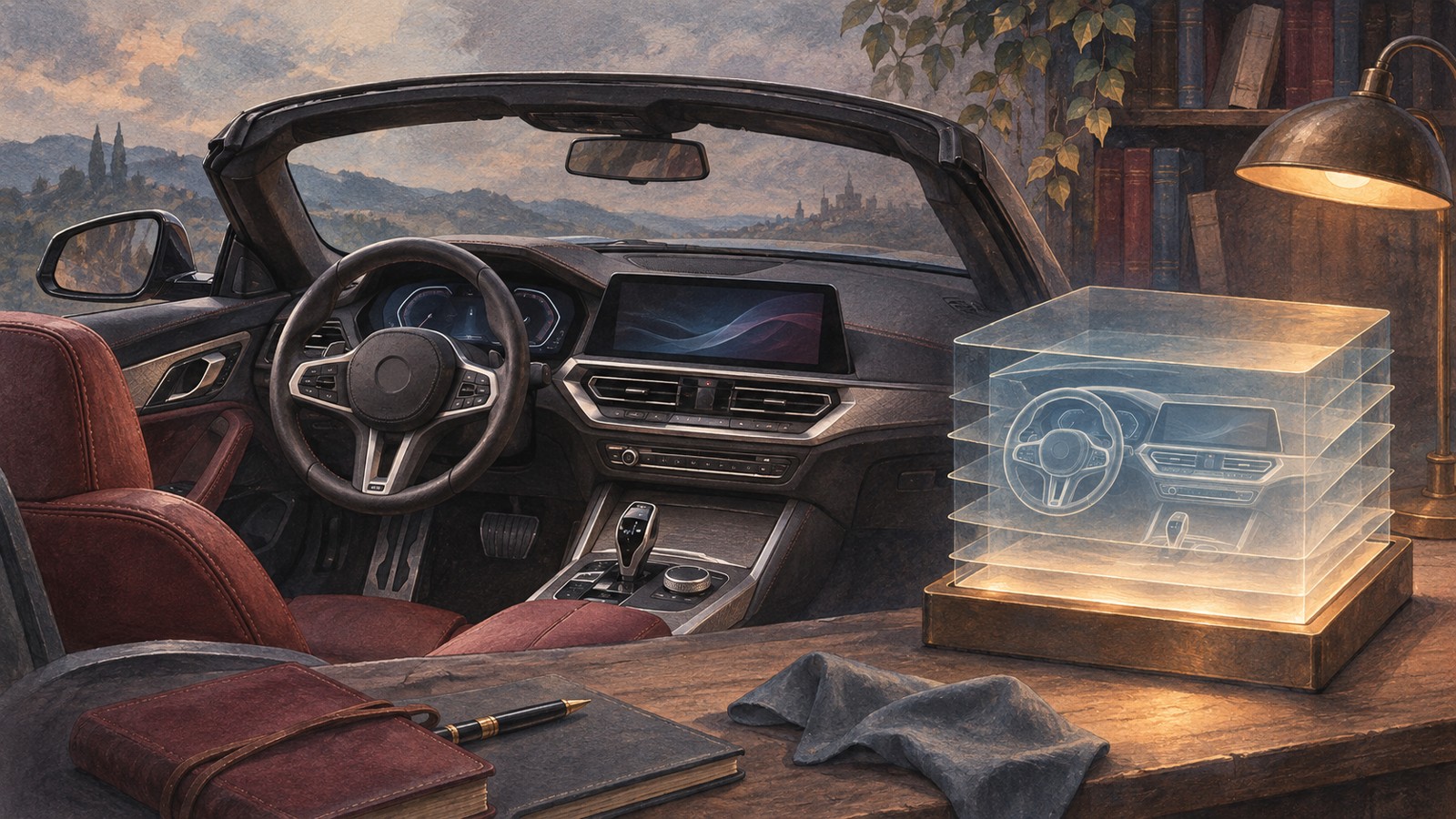
UPMI Lab backed up a BMW G29’s vehicle configuration, original coding and app files before applying custom apps, then restored MGU coding after establishing the access environment. It read the data back from the vehicle for comparison and checked factory functions including cameras, audio and CarPlay.
MGU is the unit responsible for the vehicle’s display and infotainment. This case covers preparations and restoration intended to preserve existing functions while adding apps. It documents coding restoration and selected functional checks, not verified recovery from every possible firmware failure.
New functions require work to preserve existing ones
Installing an ordinary app can seem reversible by uninstalling and reinstalling it. Writing a vehicle’s underlying software is different. The public SSH tool used here warns that initial flashing can erase coding, settings and Digital Key registrations, and can leave the unit inoperable. Gaining access does not remove those risks.
Backups therefore served as prerequisites for changes, not souvenirs kept afterward. Vehicle configuration, original coding, app packages and settings, and pre-edit executables were retained separately because different faults require different originals. A saved coding file cannot recover every firmware failure, and it does not restore Digital Key registrations.
A recovery point need not be the oldest configuration
Useful changes accumulate as an owner modifies a car. Automatically returning to the first state would also discard later settings worth keeping. The G29 records distinguish the initial state, the state after access setup and coding restoration, and the later heating-enabled state. Dating these stages makes it possible to choose what to reverse and what to retain.
After initial access setup, installing or changing apps did not require reflashing the whole MGU each time. Keeping changes narrow makes the checks clearer. The ability to modify a product includes changing only what is needed and preserving the rest, alongside the ability to make extensive changes.
Restoration includes checking the vehicle again
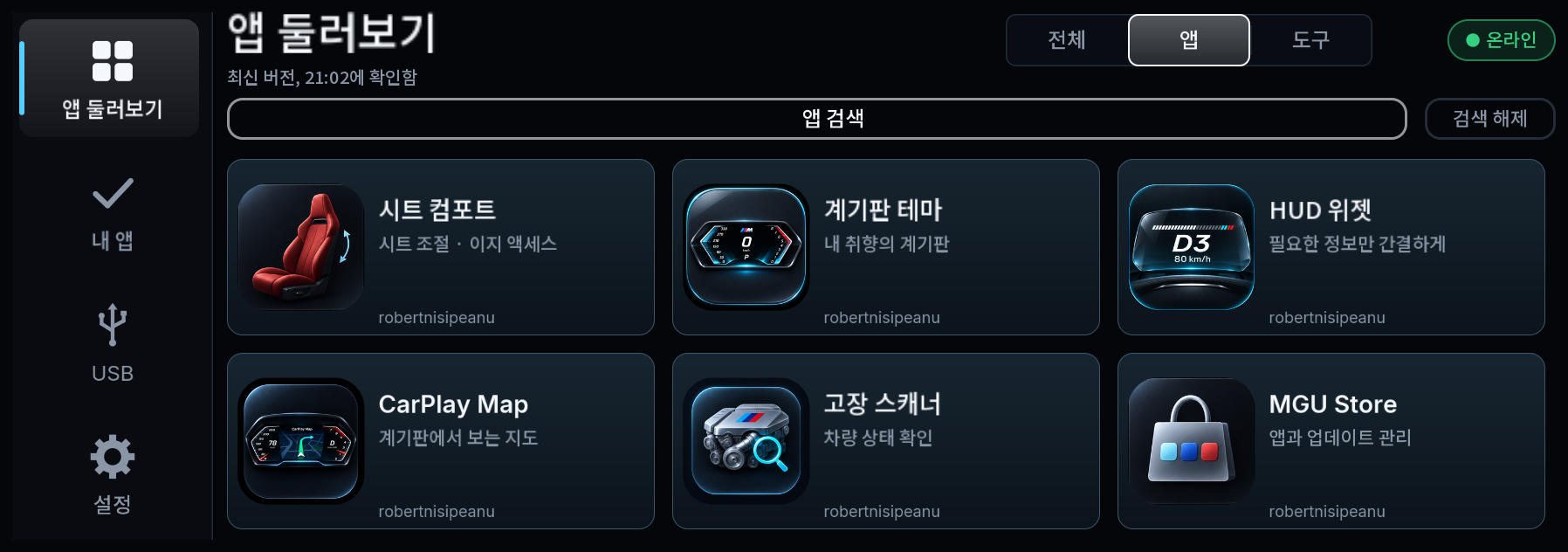
After restoring HU_MGU coding on this car, the team compared the hash of the read-back file and 23 payloads against the initial records. It then checked cameras, audio, CarPlay, the factory HUD, Store launch and access after reboot. Both file consistency and the functions needed in the car were examined. This documents that coding restoration and those checks, not recovery testing for every failure scenario.
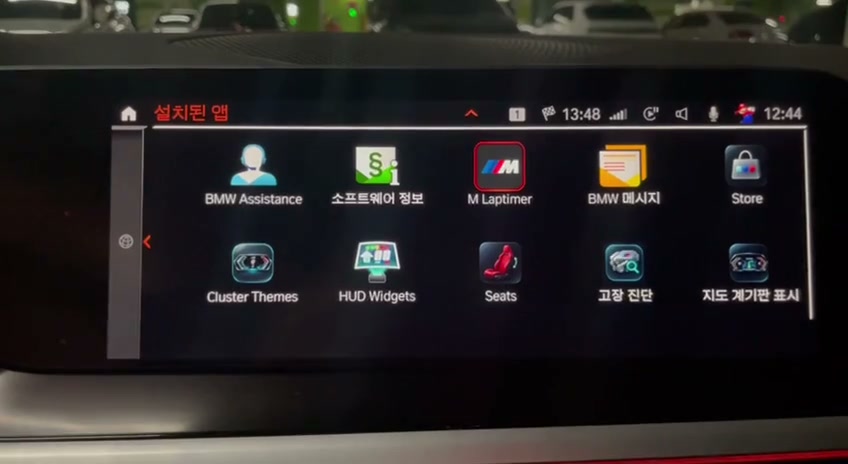
A success indicator in a tool alone does not establish dependable use. Familiar functions must remain available, and the changes must be explainable. Such work separates an attractive app-management screen from a system the owner can continue to rely on.
Access rights need maintenance capability
Public tools offer a way to explore beyond manufacturer-defined displays. They do not eliminate the time needed to understand records, track changes and diagnose problems. Owners must weigh their needs and the workload they can accept when deciding between modifications, specialist assistance or keeping the current configuration.
Backups here do more than express caution. Knowing which components can be restored, and within what limits, makes further revisions possible. Keeping a product useful through modification requires both adding new functions and preserving old ones. An owner’s practical freedom to modify the car depends on that foundation.
An in-house feature about work on the UPMI Lab operator’s personal car, checked against vehicle photographs and videos, the owner’s reports, retained handover records and public project documentation. The demonstrations were conducted while parked. This is not a BMW official product or support program, or an independent road test. Original interface captures and linked Lab records are in Korean.
- UPMI Lab · Original vehicle project record (Korean) ↗
- MGU Store · Installation requirements and app management ↗
- bimmer-lab · Cluster themes and driving modes ↗
- iDrive Custom Apps · Diagnostics app development ↗
- SSH tool · Pre-flash backups and coding restoration ↗